

Introduction to AI in Financial Analysis
The business strategies of corporates would often depend on accurate reporting, structured forecasting and systematic monitoring. The financial analysis software would provide the base for managing financial information, preparing structured reports and supporting long- term planning. The AI-driven platforms would extend the role of financial systems through automation, predictive modelling and advanced data processing. The outcome is an integrated financial approach that would connect daily operations with corporate strategy.
Definition of Financial Analysis Software
A financial analysis software would refer to a digital system used for analysing financial statements, preparing structured forecasts and ensuring compliance. Traditional tools would be spreadsheets, stand-alone databases and static reporting templates where the techniques used would be manual entry and descriptive models. Financial analysis software powered by AI would convert the process into automated data collection, predictive modelling and continuous monitoring. The software would be implemented across corporate finance, investment decisions, submissions for regulatory purposes and financial reporting across the company.
The scope of financial analysis software would also cover tasks such as MIS, KPI evaluation, variance analysis and ratio analysis. With AI integration, the same platform would support predictive simulations. This combination would create a unified framework that can connect short-term financial activity with broader corporate objectives.
Advantages of Finance Analysis Software
Using financial analysis software would deliver measurable structural advantages to companies. Reporting of data would become standardized across subsidiaries and departments. Forecasting for corporates would be standardized by means of centralized data models and formalized templates. The records for compliances are prepared systemically for regulators and also for auditors. Cash flow projections, monitoring of expenses and capital allotment are all conducted within the same unified frame. Artificial intelligence-powered financial analysis programs would continue these advantages by adding predictive modelling, scenario modelling and pattern recognition.
The forecasting cycles would become more aligned with market shifts and risk monitoring gain reliability. These outcomes would contribute to stronger planning and improved governance, especially for enterprises with complex operations.
Need for AI-Driven Financial Analysis Software
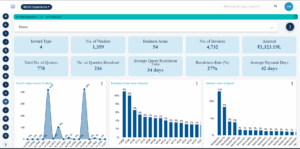
Global enterprises would handle large volumes of structured financial data. The requirement for quick turnaround in reporting cycles would create demand for financial analysis software. The traditional methods would lack the ability to manage real-time changes thus leading to delays and fragmented reporting. The AI-driven financial analysis software would address these limitations through integrated dashboards; automated variance checks and predictive forecasting.
The use of such systems would support consistency in corporate decision-making. The business strategy of corporates would gain strength from standardized reporting, reliable forecasts and systematic risk evaluation. The role of financial analysis software would extend beyond finance departments into enterprise planning, governance and compliance.
Key Features of AI-Driven Financial Analysis Software
An AI-based financial analysis software would comprise a number of key features. The data extraction on automated basis would provide for precision across various systems. The predictive modelling would facilitate long-term revenue projection, cost planning and investment appraisal. The risk discovery would flag anomalies in transactions and report them in a systematic manner. The multi-scenario simulation would enable modelling for various possible financial scenarios.
Integration with ERP, CRM and BI systems would lead to an integrated digital ecosystem. Real-time financial visibility would be available to decision-makers via dashboards. Templates for external audit and regulatory compliance reporting would be satisfied. All these would collectively develop a complete structure for both day-to-day operations and strategic planning
Strategic Impact on Business Planning
A financial analysis software would play a central role in shaping business strategy. Corporate planning would gain structure through predictive modelling and consistent data. Growth strategy would be aligned with the market forecast and sector study while resource allotment would be aided by cost structure observation and variance recognition.
The integration of compliance into long-term governance would support corporate responsibility. With AI-driven financial analysis software, the overall effect will be alignment between financial performance and enterprise strategy. This would ensure that every operational decision would remain linked with the broader vision of the organization.
Industry Applications of Financial Analysis Software
Financial analysis software would be used in the following industries-
Retail
- Seasonal demand forecasting.
- Inventory cost planning.
- Margin evaluation across regions.
- Vendor settlement scheduling.
- Multi-channel sales reporting.
Banking and Finance
- Fraud monitoring in transactional data.
- Portfolio risk modelling.
- Liquidity management across accounts.
- Regulatory compliance reporting.
- Profitability tracking across services.
Manufacturing
- Procurement cost evaluation.
- Production cycle expense tracking.
- Supply chain expenditure analysis.
- Energy consumption reporting.
- Capital investment planning.
Healthcare
- Department budget allocation.
- Resource planning for facilities.
- Cost monitoring for patient services.
- Insurance claim financial reporting.
- Compliance submission to regulators.
Future of AI in Financial Analysis
AI-driven financial analysis software would be set for continuous development. Natural language processing would support simplified financial report generation. Cloud-based platforms will provide scalability for multinational corporations with wider adoption by small and medium businesses will expand the user base of such platforms.
The long-term would be for broader accessibility and more integration of financial analysis software into company strategy. The application of AI in finance would expand beyond current use into areas of regulatory compliance, sustainability planning and risk-based systems for making decisions.
Conclusion
A financial analysis software would provide structure for financial reporting, forecasting and compliance. The AI-driven platforms would extend these functions into predictive analysis, scenario planning and anomaly detection. The role of AI would support the integration of financial management with business strategy.
Those organizations that would make use of AI-based financial analysis software would align the procedure of operations along corporate goals. The integration between AI and business planning would make possible systematic prediction, standardized reporting and proper management of risks. Through ongoing evolution, financial analysis software shall be at the core of corporate strategy and corporate long-term viability.
