
In today’s ever changing economic environment, businesses have to navigate inflationary pressures, fluctuating interest rates, supply chain disruptions and shifting customer demands. The one financial discipline which would stand out as both foundational and strategic amongst this uncertainty would be cash flow planning. While profitability would remain important, liquidity would determine survival. Companies don’t fail because they lack profit on paper, they would fail because they have run out of cash.
For finance professionals, consultants and advisors, the real opportunity would lie in using cash flow planning proactively. Instead of treating as a backward-looking report exercise, it can be used as a forward-thinking advisory tool that would drive smarter decisions, stronger business relationships and long-term resilience.
In this blog, let us explore how can you best use cash flow planning.
Why Cash Flow Planning Matters More Than Ever
The process where the cash inflows and outflows of a business are forecasted, monitored and its movement optimized is known as cash flow planning. It would provide visibility into liquidity positions, helping business anticipate shortfalls, manage surpluses and make informed financial decisions.
In uncertain markets, accurate cash visibility would enable business to:
- Avoid liquidity crises
- Optimize working capital
- Negotiate better financing terms
- Plan investments strategically
- Improve operational efficiency
When advisors would elevate cash flow planning from a reactive report to a strategic advisory function, they would move from being accountants to being trusted financial partners of the organization.
1. Shift from Historical Reporting to Predictive Forecasting
Many businesses even today rely on historical cash reports which would only show what has already happened. The real and true power of cash flow planning would lie in forecasting future scenarios.
The organization can encourage their business to adopt rolling forecasts typically from 12 to 18 months which can be updated monthly or quarterly. Instead of static annual forecast. Rolling models would continuously incorporate new data and business developments.
You can support the business by:
- Building scenario-based projections (best case, base case, worst case)
- Modelling seasonal fluctuations
- Stress-testing revenue assumptions
- Simulating delayed receivables or increased expenses
Predictive forecasting would transform cash flow planning into a decision-making engine rather than a compliance requirement.
2. Use Cash Flow Planning to Strengthen Working Capital
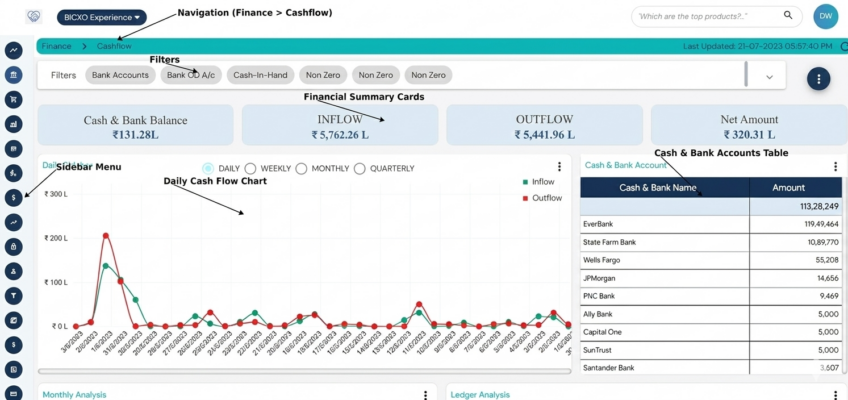
One of the fastest ways to improve liquidity without increasing revenue is working capital optimization. The organization would be able to identify bottlenecks in receivables, payables and inventory through detailed cash flow planning.
For example:
- The organization can identify slow-paying customer by analysing day sales outstanding (DSO)
- The payment terms with suppliers can be reviewed to extend payables without harming relationship.
- Evaluate inventory turnover to avoid overstocking.
- The inventory turnover can be evaluated to avoid overstocking.
The businesses would be able to unlock tapped cash and would reduce reliance on external financing by improving working capital efficiency.
As an advisor, the company can create dashboards and regular reports that would highlight these trends thus making cash flow planning an ongoing performance discussion rather than a periodic exercise.
3. Align Cash Flow Planning with Strategic Goals
Cash flow planning should not operate in isolation from business strategy. Instead, it would directly support growth initiatives, expansion plans, hiring decisions and capital investments.
For example, if a business would plan to expand into a new market, cash flow projections would be able to determine:
- Whether internal cash reserves are sufficient
- If external funding is required
- The optimal timing of expansion
If the businesses would also be contemplating the implication of major capital expenditures, scenario analysis would be a useful tool to see if liquidity would remain stable post-investment.
Making it clear for the business while choosing strategy, will lead to alignment with cash flow planning. It would allow them to make confident decisions.
The business would gain confidence in their decisions because they would be backed by financial clarity when their cash flow planning is aligned with strategy
4. Prepare Businesses for Risk and Uncertainty
Economic uncertainty would be no longer the exception but a norm. The effective cash flow planning would help businesses build financial resilience.
This would encourage business to:
- Maintain minimum cash reserve thresholds
- Build contingency buffers
- Diversify revenue streams
- Monitor leading indicators like order pipelines
Stress testing would be particularly valuable as it would help the businesses know What would happen if the revenue drops by 20%? What if key customers delay payments? How would rising interest rates would affect debt servicing?
When business would see potential risks modelled clearly, they would be better equipped to respond proactively rather than reactively.
5. Support Smarter Financing Decisions
Cash flow planning will play a crucial role in determining financial needs. Many businesses would either borrow too late (during crisis) or would borrow too much (increasing unnecessary interest costs).
Through accurate forecasts, the organization can help businesses:
- Determine optimal credit facility limits
- Time funding rounds effectively
- Negotiate better loan terms
- Decide between debt and equity financing
Banks and investors would also favour businesses with structured cash flow planning processes. Clear projections would demonstrate financial discipline and reduce perceived risk.
6. Integrate Technology for Real-Time Visibility
The manual spreadsheets would often error-prone and time consuming. The modern finance tools would allow automation, real-time dashboards and dynamic forecasting.
Encourage business to adopt technology that:
- Integrates with accounting systems
- Automatically updates forecasts
- Provides real-time cash position visibility
- Enables collaborative planning across departments
Automation would reduce manual effort and increase accuracy thus allowing finance teams to focus on analysis rather than data entry.
7. Enhance Business Relationships Through Continuous Advisory
One of the most powerful ways to use cash flow planning today is to transform it into a recurring advisory service.
Instead of discussing cash flow only during annual reviews or crises, schedule regular monthly or quarterly strategy sessions.
Use these meetings to:
- Review forecast variances
- Adjust projections
- Identify emerging risks
- Explore growth opportunities
This consistent engagement would position you as a strategic partner rather than a transactional service provider.
8. Use Cash Flow Planning to Improve Pricing and Profitability
There would be hidden profitability issues which would reveal cash flow planning. A business would appear profitable but would suffer from poor cash trimming due to extended credit terms or uneven revenue cycles.
You can help business:
- Re-evaluate pricing models
- Adjust payment terms
- Introduce milestone-based billing
- Incentivize early payments
Businesses would strengthen both liquidity and profitability by aligning pricing strategies with cash inflows.
9. Educate Business on Cash Flow Literacy
Not all business owners fully understand cash flow dynamics. Part of using cash flow planning effectively is education.
Simplify complex forecasts into clear, visual summaries. Explain concepts such as:
- Operating vs. free cash flow
- Cash burn rate
- Break-even analysis
- Liquidity ratios
When businesses understand these fundamentals, they make more informed decisions and appreciate the value you bring.
Conclusion: Turning Cash Flow Planning into a Strategic Advantage
Cash flow planning is no longer just a finance department function but it is a strategic necessity. This would be a powerful opportunity to deliver measurable value to business.
Cash flow planning would be transformed into proactive advisory framework by shifting from static reporting to predictive forecasting, aligning projections with strategic goals, optimizing working capital, preparing for risk and leveraging technology.
In present day environment, liquidity will be power. The business who would master their cash flows would gain flexibility, confidence and competitive advantage while the finance professionals who would guide them would become indispensable partners in growth.
The question would be no longer whether the business would invest in cash flow planning but it would be how quickly it would help them to use it to their advantage today.
