
Organizations today are under constant pressure to control costs, enhance visibility and ensure compliance without impeding the energy of the business. They still use spreadsheets, emails and manual approvals to manage employee expenses even now. Outdated practices led to costly mistakes, slow payments, rule-breaking and very little visibility of expenses.
In this context, expense management automation will play a crucial role in achieving financial efficiency and control. Expense management automation would alter the way organizations cost, approve, process and analyse. Switching from manual processes to intelligent automated systems which streamlines finances will allow firms to reduce operational friction and enhance data-driven decision-making

What Is Expense Management Automation?
The Expense management automation would refer to using software and technology for speeding up and simplifying the whole expense management function in which the end use cases are regularly managed. An ideal data synchronization experience from one tool to another would help save time as well as enhance operational efficiency.
Automation would enable employees to upload receipts digitally, submit claims through mobile or web platforms and track approval status in real time instead of employees filling out expenses manually. The finance teams would benefit from standardized processes, built-in controls and accurate, audit ready data.
Why Manual Expense Management No Longer Works
The conventional expense management processes would be increasingly misaligned with the needs of modern enterprises. The manual systems would be time-consuming and heavily dependent on human intervention thus making them prone to errors and inconsistencies. The common challenges would include:
- Delayed expense approvals and reimbursements
- Lost or incomplete receipts
- Difficulty enforcing expense policies
- Limited visibility into real-time spending
- High administrative workload for finance teams
Challenges would multiply as transaction volumes would grow and workforces would become more distributed. The expense management automation would address these pain points by creating a faster, more transparent and scalable approach to expense control.
Key Benefits of Expense Management Automation
1. Faster Expense Processing and Reimbursements
Automation would significantly reduce the time required to submit, review and approve expense. The digital workflows would eliminate back and forth emails and manual follow-ups. Due to this, employees would be able to reimburse faster, would improve satisfaction and trust while finance teams would close expense cycles would more efficiently.
2. Improved Accuracy and Reduced Errors
One of the biggest sources of expense errors would be manual data entry. The automated expense management system would use latest technologies like AI ( artificial intelligence) to capture and validate data accurately. This would minimize duplicate entry, incorrect amounts and missing information.
3. Stronger Policy Compliance
The company policies would be enforced automatically by expense management automation. The guidelines are used to identify out-of-policy expenses and impose spending limits, which further require extra approvals. It would keep compliance going on without monitoring it manually.
4. Real-Time Visibility into Spending
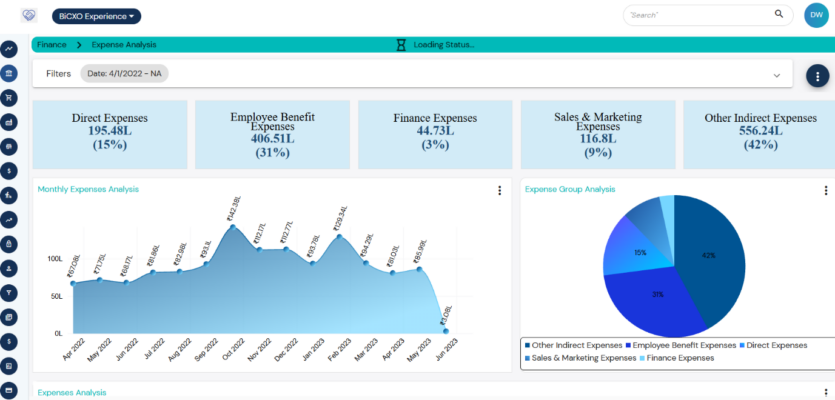
Automated dashboards would provide insight into enterprise spending patterns in real-time for the finance leaders. Wider visibility would enhance budgeting, forecasting and cost optimization, thereby enabling organizations to respond proactively rather than reactively to their finances.
5. Lower Administrative Costs
Expense management automation would reduce manual efforts and help finance teams get rid of repetitive workload including data entry, reconciliation and report consolidation. This will improve their financial analysis, strategic planning and process improvement as they can value work higher.
How Expense Management Automation Streamlines Enterprise Finances
The way enterprise finances are streamlined through expense management automated. The automation of expense management would help in aligning operational spending with higher-level financial objectives. Automated systems would standardize expense data across departments, locations and currencies making it simpler for information to be consolidated at the enterprise level.
The integration of accounting and ERP systems would ensure that a straight-through flow of expense data into the general ledger takes place reducing reconciliation and accelerating month-end close. If audits are automated then the complexity of internal and external audits will lessen which will enhance governance and risk management.
Automation will help global organizations to spend in multiple currencies and follow distinct tax and regional guidelines for uniformity.
Key Features to Look for in an Expense Management Automation Solution
When evaluating expense management automation software, enterprises should prioritize solutions that offer:
- Automating approval workflows with configurable rules.
- Enforcing policies and checking compliance.
- Integration with ERP, bookkeeping and other systems.
- Real time analytics and reporting dashboards.
- Support and scalability in global operations.
The solution with such features would not only automate tasks but also enhance financial control and decision- making.
The Role of Automation in Strategic Financial Planning
Expense management automation will help strategic finance initiatives as well as operational efficiency. Information about expenses which is up to date would be essential for cash flow planning, budgeting and forecasting processes. The finance executives would be able to uncover cost trends, identify savings possibilities and align expenditures with business priorities.
Automation systems will also help in the digital finance transformation by creating a connected financial ecosystem where expense data, payments and reporting work together. This framework will help future-ready organizations in advanced analytics, Ai-driven insights, predictive financial models and more.
Conclusion
Expense management Automation would no longer be an administrative function but it would be a strategic lever for financial performance and operational excellence. Expense management automation would help companies improve processes, reduce costs, increase compliance and gain real-time visibility into expenses.
The organizations would be able to turn expense management from a bottleneck to a value-driven capability by replacing manual workflows giving seamless experience. As the business would continue to expand and adapt to the changing business requirements, investing in expense management automation would be an important step towards making the function more agile, transparent and resilient.
