

Introduction to Accounts Payable Automation
Automating accounts payable would be a finance solution for businesses to manage their obligations to pay short- term debts to its suppliers or creditors. Automation would help business organize and track invoices, automate payment approvals and maintain records of all payables thus supporting finance teams by providing a structured and efficient method to handle large volumes of invoices, match purchase orders, reconcile payments and ensure vendors are paid on time.
Why Businesses Should Use Accounts Payable Automation?
Businesses may face problems like high error rates, time delays and difficulties in maintaining accurate records due to manual accounts payable processes. These challenges would lead to late payments, strained vendor relationships and inefficient use of staff time.
The above issues by using automation, it would use digital invoice receipt, storage of documents in a centralized location and formatted approval workflows. This will enhance accuracy, policy compliance and ease audit preparation. Integration with enterprise resource planning (ERP) systems, banking platforms and procurement tools would provide a smooth financial process.
Compliance would be the other key advantage as accounts payable automation would enable companies to comply with tax codes, internal guidelines and terms of vendors. Real-time dashboards and reporting facilities will provide managers with visibility into cash flow, outstanding obligations and spending habits.
How Is AI Transforming Accounts Payable Automation?
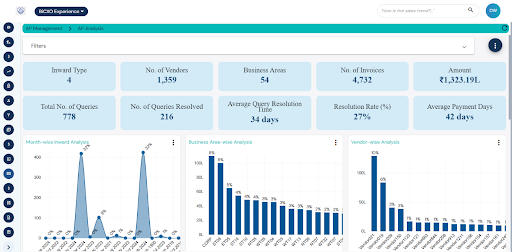
Artificial Intelligence (AI) will introduce significant changes in the way accounts payable automation would function. Traditional systems which relied on predefined rules and manual intervention. AI-powered systems would bring intelligence, adaptability and speed to invoice processing.
AI would also enable invoice classification as it would automatically determine whether an invoice is based on a purchase order, a recurring payment or a one-time service. This would help route the invoice to the correct approval path.
Duplicate detection is another area improved by AI. The system would compare new invoices against past records and flag potential duplicates based on metadata and content. This would reduce the risk of double payments and improve financial accuracy.
AI will also support dynamic approval routing. Instead of following static workflows, AI would analyse historical data, approval patterns and policy rules to determine the most appropriate approval path for each invoice. This would increase speed and ensure compliance.
Fraud prevention is another important area where AI systems would monitor behaviour, assess risks and detect unusual patterns in invoices or payment requests. Alerts would be triggered when the system identify anomalies, such as altered bank details or unexpected charges.
Self-learning is a core strength of AI. Over time, the system would improve its accuracy by learning from user corrections and feedback. It would adapt to changes in invoice formats, vendor behaviour and approval practices thus reducing the need for manual adjustments.
AI-powered chatbots may be used to support vendor communication. These bots would handle inquiries, provide invoice status updates and confirm payments thus improving the vendor experience without additional workload for staff.
Predictive analytics powered by AI could offer insights into future cash requirements, forecast payment cycles and identify potential risks. This will help businesses plan budgets, manage working capital and align payments with business goals.
Elements of Reasoning and Projections
AI adoption in accounts payable will be driven by current business needs. Growing invoice volumes, increasing supplier diversity and the shift toward remote work require digital solutions that scale efficiently. Manual processes would be too slow and error-prone to keep pace.
Accounts payable systems will now integrate with cloud computing, APIs and AI technologies. Businesses would expect faster processing, better compliance and improved cost control. AI would enable these outcomes by automating repetitive tasks and providing real-time insights.
Projections would indicate that AI adoption in finance will continue to grow. More companies will shift to AI-powered platforms which would reduce manual work and increase data-driven decision-making. Vendors will offer more intelligent features which will include autonomous invoice processing and real-time analytics.
However, challenges would remain. Data quality, system integration and user adoption could affect AI success. Businesses should ensure that invoice data is consistent and accurate. They should also invest in training and change management to help teams transition to AI-enabled workflows.
Decision Making, Risk Management and Strategic Advisory
AI would contribute to better decision-making in accounts payable. By analysing past transactions, spend data and policy compliance, AI would help managers make informed choices about approvals, payment timing and vendor relationships.
Risk management would improve through AI-based monitoring and alerts. The accounts payable processing software would track contract terms, verify supplier details, and detect unauthorized access or unusual activity. This would reduce the chances of fraud or regulatory violations.
AI would also support strategic advisory roles by offering insights into spending trends, vendor performance and budget alignment. Accounts payable automation would help finance leaders plan future actions. Scenario analysis features would simulate different payment strategies and will help businesses choose the best path.
Governance benefits from AI features such as role-based access control, detailed audit logs and threshold-based alerts. These tools would ensure that financial processes remain transparent and compliant with internal and external requirements.
AI-generated reports, dashboards and KPIs would allow stakeholders to track performance, identify inefficiencies and optimize financial strategies. Recommendations for early payment discounts, supplier consolidation or workflow changes will be based on solid data.
Conclusion
AI will be transforming accounts payable from a manual, task-based system into a smart, integrated financial tool. Businesses would be moving towards automation, real-time processing and predictive insights.
With AI, companies will be able to reduce errors, accelerate processing and improve compliance. They will also gain better control over cash flow enhance vendor relationships thus making more strategic decisions.
The future of accounts payable lies in intelligent automation. AI will continue to evolve and bring new capabilities to finance teams. Organizations that embrace AI-powered systems will be better equipped to manage their finances with precision and confidence.
