

For businesses, financial forecasting has always been an important function for businesses thus enabling leaders to plan budgets, allocate resources and make informed strategic decisions. Conventionally, forecasting depended heavily on historical data, spreadsheets and manual assumptions. However, in business environment present day which is fast-changing, these methods would often fall short. This is where artificial intelligence is making a significant impact by implementing AI in finance forecasting which would transform how organizations would predict future performance, manage risks and respond to uncertainty with greater confidence and accuracy.
The conventional techniques for financial forecasting would rely on static models, linear projections and periodic updates. Initially, such approaches would work in stable environments later on they would struggle to adapt to real-time market fluctuations, complex data sets and sudden disruptions. Forecasting manually would increase the risk of human error, bias and revisions which would take long time.
AI in financial forecasting would introduce a more intelligent and adaptive perspective. AI would help finance teams utilize predictive analytics and automation through the assistance of machine learning algorithms and enable proactive analytics and future – oriented decision making.

What Is AI-Driven Financial Forecasting?
AI in financial forecasting would refer to using AI technologies to analyse large volumes of structured or unstructured data, identify patterns and generate predictive insights. AI would learn from new data thus increasing its accuracy unlike traditional models
These systems would process inputs from multiple sources such as past financial records, market conditions, economic indicators, customer behaviour and even external factors such as geopolitical events. The result would include improved forecasting system which would be reflective of both internal and external dynamics.
Key Ways AI Is Transforming Financial Forecasting
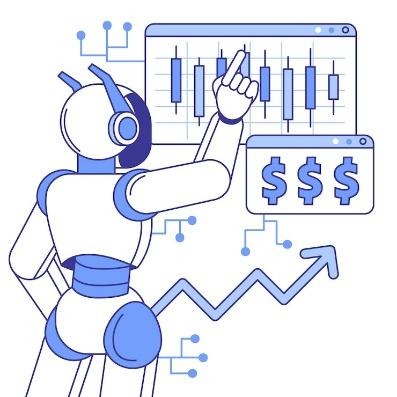
1. Improved Forecast Accuracy and Speed
Enhanced accuracy is one of the most significant benefits of AI in finance forecasting. AI algorithms would detect complex relationships within data that traditional models may overlook. They would also eliminate many manual calculations thus reducing errors and accelerating the forecasting cycle.
The finance teams would generate forecasts in minutes rather than days or weeks thus allowing organizations to respond quickly to changes in demand, pricing or costs.
2. Real-Time and Continuous Forecasting
The traditional forecasting would be often performed monthly or quarterly thus making it outdated almost as soon as it would be completed. New data would become available as AI would enable continuous forecasting by updating projections in real time using historical trends to gain forecasts very close to the expected outcome.
This real-time capability would help businesses adjust strategies proactively instead of reacting after performance gaps have already occurred.
3. AI-Driven Variance Analysis
AI-driven variance analysis would be another powerful application transforming forecasting processes. The variance analysis would involve comparing actual financial performance against forecasts or budgets to identify deviations and understand their causes.
AI would automate this process by:
- Instantly detecting variances across revenue, expenses and cash flows
- Identifying root causes using pattern recognition
- Highlighting anomalies that may require management attention
The finance teams would receive intelligent alerts and insights that would explain why variances occurred and not just what changed instead of manually reviewing spreadsheets. This would allow for faster corrective actions and better performance management.
4. Scenario Planning and Predictive Insights
AI would excel at scenario modelling by simulating multiple “what-if” situations. Finance leaders would evaluate best-case, worst-case and most-likely scenarios with greater confidence.
For example, AI can forecast the financial impact of:
- Changes in interest rates
- Disruptions in supply chain
- Adjustments in price or cost structures
These predictive insights would support strategic planning and risk mitigation, especially in volatile economic conditions.
5. Dynamic Charts and Data Visualization
Modern AI-powered forecasting tools would go beyond static reports by offering dynamic charts and interactive dashboards. These visualizations would update automatically as data changes thus providing real-time visibility into financial performance.
Dynamic charts would help stakeholders:
- Track forecast versus actual performance instantly
- Drill down into specific business units or cost drivers
- Understand trends through intuitive visual storytelling
By transforming complex data into easy-to-understand visuals, AI would improve collaboration between finance teams and business leaders thus enabling faster and more confident decision-making.
6. Enhanced Collaboration Across Functions
Often, AI in financial forecasting would blend data from sales, ops, supply chain and marketing. This would help create a consolidated view of the business to promote collaboration.
Instead of working in silos, the finance teams would align assumptions, validate data and contribute insights to a single forecasting model. Such alignment would enhance the reliability of forecast and ensure that financial plans would reflect operational realities.
Benefits of AI in Financial Forecasting for Businesses
The use of AI in finance forecasting would bring actual benefits to organizations including:
- Greater agility: Increased flexibility to strategically pivot quickly with the new forecast.
- Cost efficiency: Reducing labour and cost with automation to drive efficiency in business operations.
- Better decision-making: The insights derived from data would help in making better decisions.
- Risk reduction: A timely detection of anomalies and variances will enhance control.
- Scalability: AI models would easily adapt to changing requirements.
The businesses encountering such competition and uncertainty will particularly benefit from these advantages.
Challenges and Considerations
Even if we have AI which would offer its powerful capabilities, we would need to prepare for its success. The quality of data to be used for AI is critical as the AI models would be as good as the data provided. Organizations should also devote efforts to managing change and upskilling finance teams to work with AI. To ensure confidence in artificial intelligence driven financial outputs, security, transparency and governance will be equally important.
Conclusion
Artificial intelligence would fundamentally reshape the future of financial forecasting. It would empower finance teams to deliver quicker, smarter and more efficient forecasts through AI- financial forecasting, dynamic charts and more. As businesses would face increasing complexity and uncertainty thus embracing AI in finance forecasting is no longer a competitive advantage as it would be becoming a necessity. The organizations that would adapt AI today will be better equipped to navigate change, drive strategic growth and achieve long-term financial resilience
