
Introduction
For every business, cashflow is their lifeline. A company’s revenue will survive and grow only when they manage their inflows and outflows even if their revenue pipeline is strong. But even in such scenario, many organizations struggle with visibility into future cash positions, leading to liquidity gaps, delayed payments and reaction-based financial decisions. To rise above such challenges, businesses today are increasingly adopting cash flow planning software that would provide clarity, control and confidence in financial planning.
Before exploring how to select the right solution, let’s understand what cash flow planning software does and why it has become a business
What Is Cash Flow Planning Software?
Cash flow planning software is a digital tool that will help businesses forecast, monitor and manage their cash inflows and outflows. It would consolidate financial data from multiple sources such as accounting systems, ERP, bank accounts and payment platforms to show real-time and future cash positions.
A robust cash flow planning tool would typically include features like:
- Cash forecasting models (short-term and long-term)
- Automated data sync from financial systems
- Scenario planning and what-if analysis
- Variance analysis
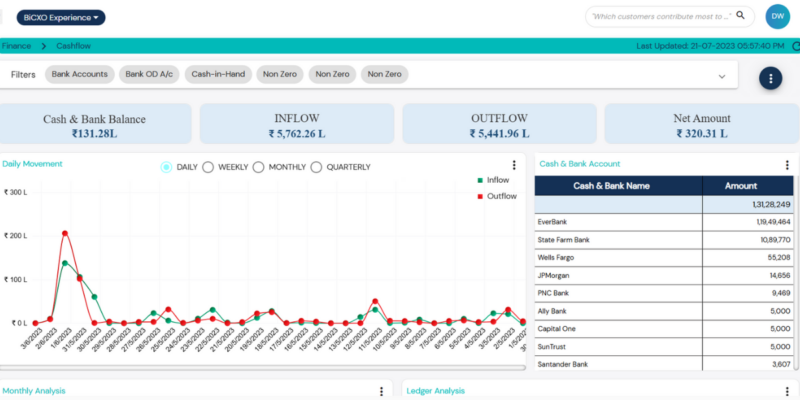
- Real-time dashboards and reporting
- Alerts for liquidity risks
With automation and predictive analytics, it would allow finance teams to plan proactively rather than reactively.
Why Should Businesses Have a Cash Flow Planning Software?
1. Accurate and Real-Time Forecasting
Manual spreadsheets would become outdated quickly whereas cash flow planning software would ensure up-to-date forecasts by pulling live data from financial systems.
2. Better Liquidity Control
The businesses would gain visibility when cash shortages or surpluses may occur thus allowing informed decisions on investments, borrowings or cost control.
3. Enhanced Decision-Making
The finance teams with the help of scenario modelling can evaluate the impact of new projects, market changes or delayed payments on future cash positions.
4. Reduction in Manual Errors
The spreadsheet errors, duplication and inconsistencies would be reduced with the help of automated data integration thus ensuring precise planning.
5. Improved Financial Agility
The companies can respond faster to market shifts or disruptions when they have clear insights into available cash with the help of cash flow planning software.
6. Stronger Stakeholder Confidence
Leadership, investors and lenders of the organization would be able to trust the financial discipline of the organization through accurate cash flow visibility.
The cash flow planning software would become a necessity for modern businesses due to such benefits which would help them navigate through unpredictable economic environments.
How to Select a Cash Flow Planning Software?

Choosing the right cash flow planning software would require evaluating features, usability and long-term business needs. Here are the essential criteria to consider:
1. Integration with Existing Systems
The organizations should ensure that the cash flow planning software would integrate seamlessly with their ERP, accounting platforms, payroll systems and bank accounts. A better integration with other systems would reduce the manual uploads and ensure real-time cash insights.
2. Accuracy and Forecasting Capabilities
The organizations should look for tools that will offer:
- Cash flow forecasting driven by AI.
- Cash flow projections which are short-term and long term.
- Forecast models which could be customized.
Such tools would make accurate forecasting possible which is the foundation of effective cash management.
3. Scenario Planning and What-If Analysis
Choose a cash flow planning software that would allow you to model multiple financial scenarios such as delayed payments, market downturns, revenue changes or large expenses. This would help businesses prepare for uncertainties and make proactive decisions.
4. Real-Time Dashboards and Reporting
A good cash flow planning software would provide visual dashboards, trend charts and automated reports that would be easy to understand and could be shared with leadership.
5. User-Friendly Interface
The finance teams should be able to use the software without steep learning curves and should look for clean layouts, intuitive navigation and easy setup.
6. Collaboration Features
If you have multiple departments involved in budgeting, choose a tool that would support role-based access, approvals and shared planning.
7. Security and Compliance
Cash flow data is highly sensitive thus the company should ensure the software would include:
- On premise
- Data encryption
- Multi-factor authentication
- Compliance with global financial regulations
- Audit trails
8. Scalability as the Business Grows
The business should select a solution that would grow with your business thus supporting additional bank accounts, entities, currencies and transaction volumes.
9. Customer Support and Training
Strong vendor will support ensure smooth onboarding and quick issue resolution.
Check for training resources, onboarding assistance and customer service channels.
10. Total Cost of Ownership
Beyond subscription fees, the businesses should consider:
- Implementation costs
- Add-ons
- Customizations
- User licenses
Organizations should choose a cash flow planning software that would provide maximum long-term value.
Conclusion
For organizations, selecting the right cash flow planning software is a crucial step towards achieving financial control, stability and agility. They can select the software by evaluating factors such as integrations, forecasting accuracy, usability, scenario planning and security. Then later the organization can choose a solution that would align with their operational needs and drive smarter financial decisions.
Organizations would gain complete visibility into their cash position with the right tool. This would enable them to plan confidently and respond faster to changes that would strengthen their financial future.
