

For corporates the two of the most critical priorities are liquidity and risk management as managing working capital across multiple regions, meeting payment obligations and safeguarding against market volatility would require structured systems. Traditional banking tools would provide transactional visibility but they would lack integration and forecasting capabilities.
A treasury management solution (TMS) is a digital platform designed to centralize treasury operations where it would consolidate balances across accounts, forecast liquidity, automate payment workflows, reconcile records and monitors risks. Unlike traditional tools that operate at the bank or transaction level, a treasury management solution would provide a centralized control framework. For corporates, it would transform liquidity and risk management from fragmented activities into structured, data-driven processes.
Liquidity Management with Treasury Systems
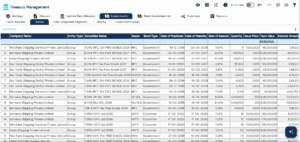
For treasury operations, liquidity will remain as a cornerstone of treasury operations. Corporates may face challenges in pooling balances across banks, subsidiaries and currencies. Traditional tools will rely on manual downloads, spreadsheets and delayed reporting whereas a treasury management solution would pool balances from all accounts and present them in real time. Categorization by region, entity or currency would highlight idle funds and ensure efficient deployment. Liquidity forecasts would combine receivable timelines, payables schedules and historical transactions to present future cash positions. Treasury teams will align borrowing, investing and funding decisions with clear visibility of available liquidity.
Risk Management through Structured Tools
Financial stability of corporates would have an impact due to exposure to currency fluctuations, interest rate changes and counterparty defaults. The positions across multiple entities would often produce incomplete assessments due to manual tracking whereas treasury management solution would integrate risk monitoring into its workflow. The dashboards provided by such solutions would display consolidated exposures and would provide scenario – based projections. The solutions would help treasury teams would mitigate risks by developing hedges, diversifying counterparties or restructuring payment terms. A structured system would minimize uncertainty and strengthen decision-making.
Integration with Enterprise Systems
Liquidity and risk insights would remain valuable only when connected with enterprise operations. Traditional tools would isolate data thus requiring parallel efforts for consolidation. A treasury management solution would integrate directly with Enterprise Resource Planning (ERP), accounting platforms and banking networks. Inflows, outflows and exposures would move seamlessly between systems. Automated interfaces would reduce manual uploads, minimize reconciliation gaps and ensure treasury operates in alignment with business units. Enterprises would gain real-time collaboration between treasury and operations thus enabling accurate and timely decisions.
Reporting and Decision Support
Timely decisions would require structured reporting. The banking statements would provide transaction details but do not support management-level insights. A treasury management solution for corporates would include reporting templates for dashboards, board reports and statutory filings. The cash positions, liquidity forecasts and risk exposures of companies would be presented in structured outputs which would help treasury leaders review trends and act on actionable intelligence. By eliminating manual compilation, reporting cycles would be shortened and accuracy is ensured.
Scalability and Governance
Growing enterprises would encounter complexity in accounts, currencies and geographies. Manual tools would often limit adaptability. A treasury management solution would scale across users, regions and subsidiaries without loss of efficiency. Role-based access would ensure segregation of duties approval hierarchies and logs embed would bring governance into daily treasury operations. The corporates would manage expansion without compromising on control or oversight.
Industry Specific Use Cases
Treasury management solution is used across industries like-
Manufacturing Industry
The solutions are used to-
- Import tracking, raw material purchases and pay vendors with real-time liquidity tracking.
- Recognize cash gaps for early payables settlement to prevent delayed production.
- Automating the management for foreign exchange risk when importing raw materials globally.
- Make working capital compatible with the production cycle for smooth functioning.
- Make short-term lending and investment choices with the help of cash predictions.
- Consolidate treasury operations across multiple plants or geographies for tighter controls.
Retail Sector
The solutions are used to-
- Monitor inflows through many sale channels (distributors, online, offline) in real-time.
- Align liquidity forecasts with seasonal demand behaviour and peak selling periods.
- Timely processing of bulk return and refund payment.
- Interconnect treasury with POS and online shopping platforms for real cash flow visibility.
- Maximize store-level cash positions with high liquidity for growth.
- Hedging foreign exchange risks for export businesses or imports.
Services Sector
The solutions are used to-
- Reconcile receivables for the project with payables in order to settle payroll as well as.
- Control pay-outs on milestones in long-term deals for improved liquidity management.
- Foresee cash requirements for labour-intensive businesses including IT, consulting, and BPOs.
- Transfer funds automatically between varying service units or geographies for the organization.
- Promote compliance by keeping books and payrolls audit-ready.
- Reducing the reliance on short-term finance by employing appropriate liquidity planning.
- Allow for scalability by adjusting liquidity models when bringing on new clients or projects.
Conclusion
Enterprises would manage liquidity efficiently while minimizing financial risks with treasury management solutions. The traditional banking tools would provide basic support but fall short in integration, forecasting and governance while a treasury management solution would consolidate cash, automate payments, forecast liquidity and monitor risks under a single framework. The treasury management solutions would equip enterprises with resilience by streamlining operations, integrating with enterprise systems and scaling with business growth. Markets which are competitive where liquidity and risk would define survival would need treasury management solutions which will provide enterprises with both structure and foresight.
