
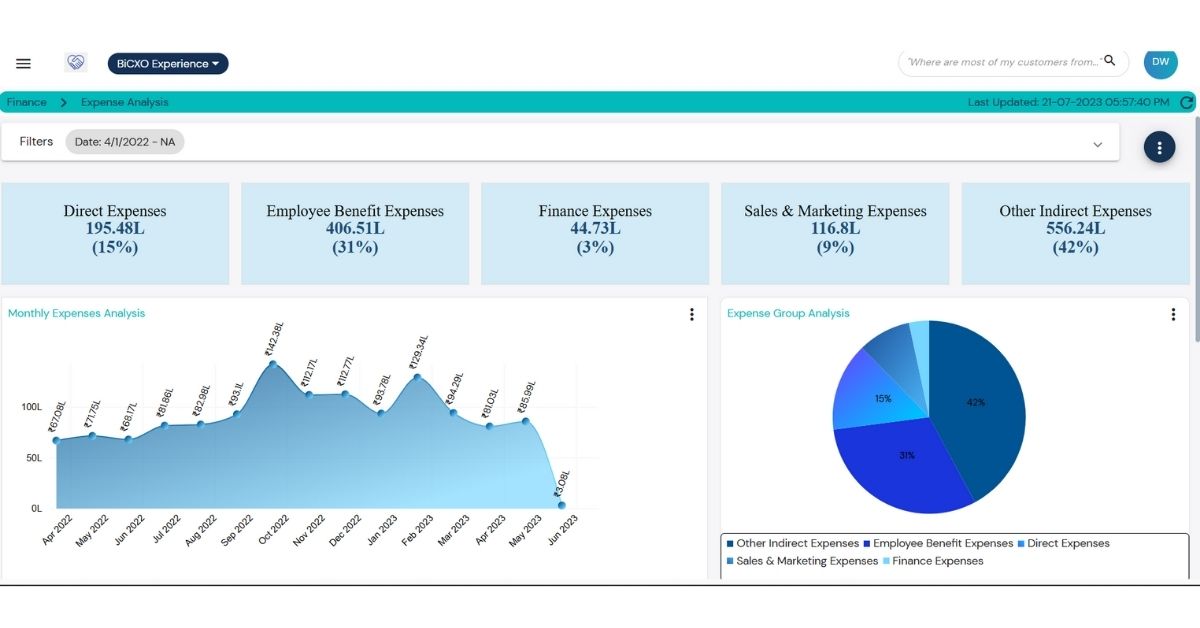
For finance teams, managing business expenses has always been a critical but complex function. As it involves everything from gathering receipts to validating claims to ensuring policy compliance and timely reimbursements, manual expense management would be overwhelming. Businesses have become a lot more data-driven and fast-paced lately and can certainly not afford inefficiencies, errors and delays anymore in this regard. This is where expense management automation would be crucial. Leveraging technology to enforce and digitise expense processes would offer businesses greater control, visibility and efficiency over their spending.
What Is Expense Management Automation?
Expense management automation is using software or technology to oversee the whole expenses lifecycle form expense submission and approval to reimbursement and reporting. The organizations would be able to streamline their expense tracking using software rather than relying on papers and spreadsheets. Such automated methods would allow employees to submit expenses digitally, often through mobile apps while finance teams would be able to review, approve and process claims in real-time.
As compared with traditional expense management methods, automation would involve physical receipts, email approvals and manual data entry. The automated solutions would integrate seamlessly with accounting, ERP and payroll systems. This would ensure that accurate data capture, faster processing and better financial control thus making expense management automation a vital component of modern financial operations.

The Challenges of Manual Expense Management
In order to understand the relevance of automation, one must first understand the disadvantages of manual expense management.
- Time Consuming Process: It took the employees an hour to fill the expense report while the finance teams manually check and reconcile the entries.
- Frequent mistake instances: Duplicate claims, incorrect amounts and misclassified expenses led to the error-filled manual data entry.
- Policy Non-compliance: Without automation checks, enforcing company expense policy would be difficult.
- Delayed Reimbursements: Slow verifications and processing would frustrate staff members and hamper morale.
- Limited Visibility: Finance leaders won’t see what exactly is being spent and how it adheres to budget.
The operational costs will rise and the ability to make sound financial decisions will go down of the firm.
Why Expense Management Automation Is Important
Improved Operational Efficiency
Efficiency is one of the most significant benefits of expense management automation. The automated workflows would eliminate repetitive manual tasks such as data entry, receipt matching and e-mail follow ups. With the help of automation, the employees would be able to submit expenses in minutes while finance teams would be able to process them faster using predefined rules and approval hierarchies. The automation would allow finance professionals to focus on strategic activities rather than administrative work.
Enhanced Accuracy and Compliance
The automated systems would reduce human error by capturing expense data directly from receipts using OCR (optical character recognition) and validating entries against company policies. The expense management automation would ensure that claims exceeding limits or violating policies would be flagged instantly. This would not only improve accuracy but would also strengthen compliance and audit readiness.
Faster Reimbursements and Better Employee Experience
For employees, delayed reimbursement would be a challenge. The approvals and reimbursements would be processed much faster within weeks instead of days by using expense management automation. The platform would allow employees to upload receipts on the go, track approval status and receive timely payments thus resulting in higher satisfaction and trust in finance processes.
Real-Time Visibility and Better Cost Control
Expense management automation would provide real-time dashboards and reports that would give finance leaders complete visibility into organizational spending. The businesses would be able to monitor expenses by department, project or category thus identifying overspending trends and take corrective action promptly. This level of transparency would be difficult to achieve with manual systems.
Scalability for Growing Businesses
As organizations would grow, the expense volumes would increase significantly. Manual processes could rarely keep up with this scale, leading to bottlenecks and inefficiencies. With expense management automation, companies will be able to handle higher expense activity without adding more administrative resources.
Key Features of Expense Management Automation
To understand its significance, it would be useful to examine the core features that most expense management automation solutions would incorporate such as:
- Digital expense submission: Employees can provide electronic receipts using their mobile devices or personal computers.
- Receipt Scanning and OCR: Data would automatically be extracted from the receipts using receipt scanning and OCR
- Policy enforcement: There will be built-in regulations that would ensure compliance with the policies of the company.
- Automated approval workflows: There would be configurable approval chains for faster decision-making.
- Integration with finance systems: Integration with finance systems would be possible resulting in seamless interface with accounting, payroll and ERP platforms.
- Enhanced reporting and analysis: The businesses will be able to access Insights on spending patterns and financial performance.
These attributes will create a cohesive process for expense management that would be streamlined and transparent.
The Strategic Value for Finance Leaders
The expense management automation will assist in financial planning and governance, apart from operational efficiencies. Finance leaders can improve budgeting, forecasting and cash-flow management with accurate, real-time expense data. Automated reporting will also improve decision-making through identifying weaknesses which are leading to cost leakages and scope for savings.
By capturing duplicate/suspicious claims at an early stage, this internal control can be automated to strengthen the internal controls and reduce fraud risk. This will be useful in organizations where teams are dispersed or they frequently travel and have project-specific expenses.
Conclusion
Nowadays, when efficiency, accuracy and agility would define successful finance operations, automating expense management automation would not just be optional but essential requirement. Companies will be able to reduce costs, improve compliance, enhance employee satisfaction and gain real-time visibility into spending by replacing manual and error-prone processes with automated workflows. In addition, the finance team would be able to spend less time on transactional tasks and more time creating business value.
Expense management automation would become an essential step for organizations to build smarter and more resilient financial operations as they embrace digital transformation.
