
Cash flow management is an important element in the financial structure of any organization. It would enable businesses to track inflows and outflows of money, manage operational expenses and prepare for future requirements. A clear understanding of financial forecasting would begin with cash flow planning. In modern business environments, cash flow planning software would provide systematic frameworks to simplify planning processes, create transparency in financial data and align projections with actual performance.
This article would explore the concept of cash flow planning, which would define cash flow planning software, which would examine the benefits of cash flow planning software for business and explain how it would improve financial forecasting.
What is Cash Flow Planning?
Cash flow planning is the systematic method of organizing and tracking incoming and outgoing funds within a business. It would focus on mapping inflows from sales, investments or receivables against outflows such as payroll, rent, vendor payments and loan obligations. Cash flow planning would establish schedules, identify gaps in liquidity and would ensure that resources are allocated efficiently.
The key components of cash flow planning would include:
- Income estimation from sales, services and investments.
- Expense categorization such as operational costs, loan repayments and supplier obligations.
- Projections for short-term and long-term cash needs.
- Tracking receivables and payables.
- Identifying surpluses or deficits over specific periods.
Imbalances that could disrupt financial stability would be prevented and visibility into timing of transactions would be provided with the help of this approach.
What is Cash Flow Planning Software?
The cash flow planning software is a digital solution which is designed to organize, record and automate cash inflows and outflows for businesses. The solution would provide a unified view of financial performance by integrating data from accounting systems, bank statements and financial records. Structured reports which would highlight variances between actual and projected cash positions and would support business decisions through accessible data dashboards is possible with the cash flow planning software.
The key features of cash flow planning software would include:
- The tracking of cash inflow and outflow would be automated.
- Accounting and ERP systems would be integrated.
- There would be real -time visibility of financial data.
- The cash flow planning software would have forecasting tools for different scenarios.
- The solution would have centralized dashboards and reports.
- There would be alerts for payment schedules or liquidity shortfalls.
The software will remove reliance on spreadsheets, reduce data entry and maintain accuracy in reporting.
Benefits of Cash Flow Planning Software for Business
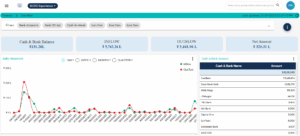
The businesses that adopt cash flow planning software can gain multiple benefits through structured financial operations. Some key benefits would include:
Improved Accuracy in Tracking
- There would be automated entry of data from accounting systems and bank feeds.
- There will be elimination of duplication in manual inputs.
- There would be consistent alignment between financial statements and forecasts.
Centralized Data Access
- There would be single dashboard view of income and expenses.
- The business units and departments would be integrated.
- There would be consolidation of financial data for decision-making.
Liquidity Management
- Identifying surpluses during specific periods would be easier.
- The cash flow planning software would help in monitoring liquidity gaps.
- There would be clearer scheduling of payables and receivables.
Strategic Planning
- Multi-scenario forecasting for various business conditions.
- Comparison between planned versus actual outcomes.
- Support for short-term and long-term business planning.
Enhanced Compliance and Reporting
- The tax and audit requirements would be aligned.
- Shareholders would receive accurate reporting formats.
- There would be transparency in cash managements processes.
Risk Management
- There would be early detection of mismatches in financial flows.
- Proactive preparation for seasonal fluctuations.
- Clear insights would be converted into external funding requirements.
How Can Cash Flow Planning Software Improve Your Business’s Financial Forecasting?
Financial forecasting is the process of estimating future revenues, expenses and liquidity positions. The cash flow planning software would enhance this process by providing structured insights, historical data analysis and predictive tools. The following aspects will explain the improvement in forecasting through cash flow planning software:
Data-Driven Forecasting
The cash flow planning software would collect data from multiple financial sources. Historical patterns, current inflows and projected expenses form the base for accurate forecasts. The businesses can review past trends and apply predictive analytics for future periods.
Scenario Analysis
Forecasting would require flexibility to address uncertainties. The cash flow planning software would offer multi-scenario modelling. Businesses can create forecasts for optimistic, conservative or neutral conditions. These scenarios will highlight the potential impact of variables such as market changes, interest rates or supplier costs.
Real-Time Updates
Forecasts would remain reliable when data reflects real-time conditions. With integrated software, cash flow positions are updated automatically. Any deviations from projected inflows or outflows are immediately recorded thus improving the accuracy of future forecasts.
Enhanced Budget Alignment
Forecasting is linked to budgeting. The cash flow planning software would ensure that forecasts align with budget allocations. The differences between planned and actual results are highlighted thus allowing timely adjustments.
Long-Term Forecasting
While long term forecasting would prepare businesses for growth or investment, short term cash flow projections would cover immediate obligations. The software- driven planning would connect operational decisions with strategic objectives. It would also extend visibility across multiple financial years.
Collaboration and Transparency
Cash flow forecasting would involve multiple stakeholders such as finance teams, department heads and management. The software platform would centralize data thus ensuring that all teams would operate with the same financial information. This would improve consistency in business forecasting.
Integration with Financial Planning Tools
The modern software would integrate with enterprise resource planning (ERP) and other financial planning applications. Forecasting thus would become part of a unified financial strategy thus ensuring accuracy and consistency across systems.
Support for Decision-Making
The forecasts generated from cash flow planning software would provide management with insights into investment opportunities, funding needs or operational cost control. This would ensure that forecasting would support both strategic and tactical decisions.
Additional Use Cases Across Industries
Manufacturing
- Forecasting of raw material costs and supplier payments.
- Planning for seasonal demand fluctuations.
- Management of large-scale capital investments.
Retail
- Forecasting of inventory purchase cycles.
- Alignment of promotional campaigns with cash flow.
- Management of supplier contracts and payment terms.
Services
- Planning for payroll and operational expenses.
- Aligning client receivables with project timelines.
- Budgeting for long-term contracts and subscriptions.
Conclusion
For every business, their cash flow planning would remain central for their financial health. Through structured monitoring of inflows and outflows, businesses would be able to prepare for both future requirements and immediate obligations. The cash flow planning software would boost this approach by providing accuracy, transparency and integration with financial systems.
By using cash flow planning software, the forecasting would be enhanced by delivering real time updates, scenario modelling and data driven insights. The business across industries would benefit through improved liquidity management, strategic alignment and reliable long- term planning.
In conclusion, the cash flow planning software would act as a foundation that would support robust financial forecasting, reduce risk exposure and would ensure stability in business operations.
