Introduction
For any organization, financial data forms the basis of every business decision. For each entry whether its revenue, cost or investment, it would shape an organization’s financial position. However, this information would remain fragmented and difficult without a structured system. The financial analysis software would provide a unified method to collect, process and interpret data, thus ensuring there is accuracy and accessibility across the organization.
The companies would rely on the software for accurate and timely data to plan budgets, forecast results and measure performance. The manual processes would often create inconsistencies, delays and limited visibility, whereas the financial analysis software would convert data into structured, actionable insights that would strengthen the decision-making process. It would then transform raw figures into useful information that would support planning, control and evaluation at every management level.
What Is Financial Analysis Software?
The financial analysis software is a digital platform that would gather, process and analyse financial data from multiple systems within a business. It would integrate information from accounting, budgeting, procurement, payroll and sales into one centralized database. The software would translate data into meaningful indicators of performance, liquidity and profitability.
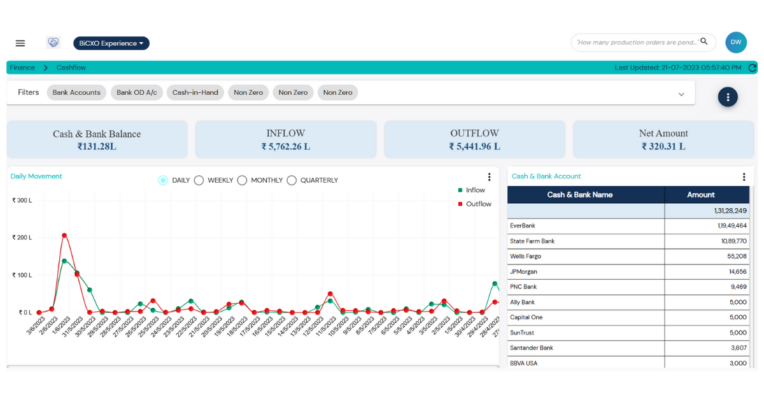
The software would connect operational and financial information thus ensuring consistency across reports. Data such as profit margins, cost trends and cash flow in real time would be displayed by the dashboards and visualization.
The software would provide an end-to-end view of financial performance by through integration with enterprise systems like ERP or CRM. It would allow management to trace every figure back to its source thus improving accuracy and reliability across all reports.
How Financial Analysis Software Benefits Businesses?
1. Centralized Data Management
Different departments would often maintain separate financial records. The financial analysis software would consolidate all this information into a single source of truth. This centralization would remove duplication and inconsistency thus ensuring that every decision-maker would refer to the same data set. It would eliminate dependence on manual reports and spreadsheets thus reducing delays in communication.
2. Improved Accuracy and Fewer Errors
Often with manual reporting methods like manual entries, calculations and reconciliations, there would be mistakes which would affect reports and decisions. The financial analysis software’s automation would apply built-in rules to validate data and flag inconsistencies. The result would be precise, reliable information that would strengthen budgeting, forecasting and reporting accuracy.
3. Real-Time Financial Visibility
The financial analysis software would continuously record and update financial transactions while allowing management to view real-time insights into revenue, costs and cash flow. The real-time dashboards would display key indicators such as expense ratios, sales margins and liquidity positions. This immediate access would enable prompt corrective action when deviations would occur.
4. Regulatory Compliance and Audit Support
The financial reporting standards would demand accuracy, transparency and accountability. The financial analysis software would maintain audit trails for every transaction where each record would include source details, timestamps and approvals. During audits, this documentation would provide easy traceability and compliance with local and international accounting standards.
5. Cost and Resource Optimization
The system would help organizations link spending to outcomes. By identifying cost drivers and resource utilization patterns, it would guide management in allocating funds efficiently. Data-based analysis would replace assumptions with measurable evidence thus improving operational and financial efficiency.
6. Forecasting and Financial Planning
Forecasting forms a critical part of strategic management. The financial analysis software would use historical data and mathematical models to project future outcomes such as revenue growth, expense behaviour and funding needs. The businesses that would use these projections to plan budgets, set targets and anticipate potential risks.
7. Better Investment Evaluation
Investment decisions depend on accurate assessment of returns, risks and cash requirements. Financial analysis software would calculate key indicators such as return on assets, debt coverage and cash flow forecasts. These metrics would enable businesses to evaluate multiple investment options objectively and choose the one with the most suitable financial impact.
How Financial Analysis Software Enhances Decision-Making?

Data-Driven Insight
Decision-making will improve when it relies on verified data. The financial analysis software would provide accurate and comprehensive financial information. The management can review each decision through quantitative analysis rather than assumptions.
For example, during expansion planning, leaders can analyse cost behaviour, revenue patterns and capital strength before allocating resources.
1. Continuous Performance Evaluation
The software would track key financial indicators such as margins, cost ratios and capital utilization. Comparing these indicators across time periods or departments would reveal areas requiring attention or improvement. This continuous evaluation would ensure that strategic actions remain aligned with organizational goals.
2. Scenario Planning and Risk Management
The financial analysis software would support scenario modelling, where variables like pricing, demand and cost can be adjusted to simulate different situations. The results would help management prepare for fluctuations thus reducing uncertainty and enabling stronger risk control.
3. Strategic and Operational Alignment
Effective decisions must align with corporate strategy. The financial analysis software would connect daily operations with long-term goals by linking performance indicators to financial results. When outcomes would deviate from set targets, the software would highlight discrepancies thus helping teams take corrective measures promptly.
4. Accountability and Transparency
Every financial activity should have a digital record. This transparency would ensure clear accountability for financial decisions and outcomes. Objective reports would allow teams to evaluate actions based on measurable performance rather than assumptions thus improving responsibility across departments.
5. Continuous Monitoring and Responsiveness
The software would enable daily monitoring of financial health thus replacing the need to wait for periodic reports. The management can observe receivables, payables and liquidity in real time. Such ongoing observation would enhance responsiveness to operational and market shifts.
6. Integration with Operational Data
Financial decisions would often depend on non-financial information such as production, sales or supply chain data. The financial analysis software would integrate these areas to create a unified performance view. This integration would ensure that financial decisions reflect operational realities thus leading to more coordinated strategies.
7. Support for Long-Term Growth
By basing decisions on consistent analysis, organizations would build sustainable financial control. The financial analysis software would help balance short-term profitability with long-term value creation. It would enable systematic evaluation of investments, pricing and expansion strategies using measurable results.
Conclusion
The financial analysis software would establish a data-driven foundation for effective financial management in organizations. It would consolidate data scattered data, ensure accuracy and maintain compliance. The software would deliver real-time visibility into costs, revenues and profitability while supporting informed financial and operational decisions.
The software would remove guesswork from decision- making and replace it with measurable evidences through continuous analysis and integration. The managers cab plan, evaluate and adjust strategies based on factual data and reliable forecasts.
The ability to make precise and timely financial decisions would determine business resilience in today’s competitive environment. The financial analysis software would provide the structure, accuracy and visibility necessary to achieve that objective. It functions not only as an analytical system but also as a continuous guide for strategy, planning and improvement across the organization.
