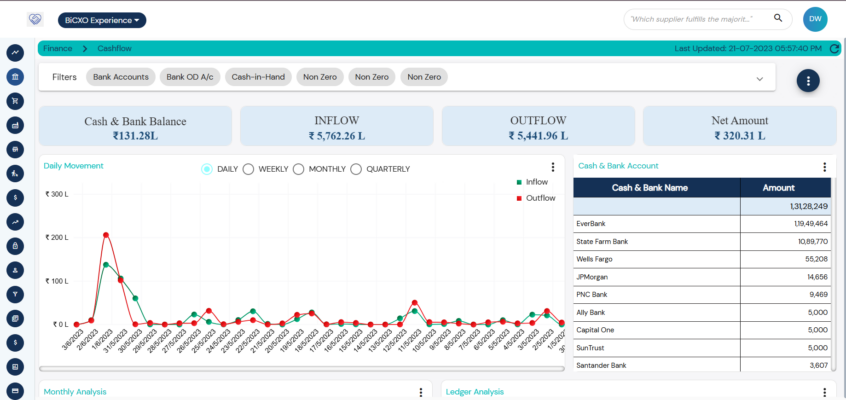
For every business, cash flow is its lifeline. Even profitable businesses would struggle or fail if they don’t have a clear view of their future cash position. In an environment distinguished by economic uncertainty, fluctuating demand and rising costs, depending on spreadsheets or backward-looking reports would be no longer enough. This is where a cash flow planning software would become a strategic necessity rather than a financial luxury.
A cash flow planning software would help businesses visualize what’s ahead, anticipate risks and make confident decisions based on accurate, forward-looking data.
What Is Cash Flow Planning Software?
A cash flow forecasting tool helps automate, analyse and forecast an organization’s cash inflows and outflows. The software would provide forecasting based on scenarios and real-time insights through automated programs, unlike forecasts delivered via manual spreadsheets.
The cash flow planning software will integrate with your accounting systems to create a single source of truth for cash management and future planning.

Why Cash Flow Visibility Is Critical for Businesses
Effective cash flow management involves not only tracking cash inflows and outflows but also understanding cash flow timing, predicting cash shortfalls and ensuring adequate liquidity to support growth initiatives.
Businesses may face issues due to cash-flow visibility:
- Vendors and employees delayed payments.
- Struggling to pay debts.
- Opportunities for investment/expansion missed.
- Greater dependence on emergency finance.
Cash flow planning software will make it easier for companies by combining data, as well as forecasting cash position in the future. It will also highlight gaps before they become critical.
How Cash Flow Planning Software Shows What’s Ahead
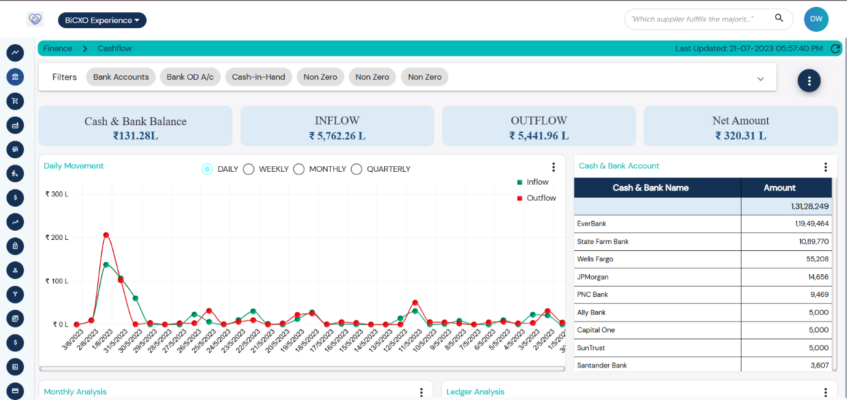
1. Forward-Looking Cash Forecasts
The biggest advantages a cash flow planning software would have is its ability to generate accurate, forward-looking forecasts. The predictions would rely on previous trends, outstanding receivables, payables, payroll and estimate of expenses.
Automated forecasting can help businesses in:
- Forecast cash positions weeks or months ahead.
- Spot cash deficits before they arise.
- Be proactive in planning.
With this visibility, leadership teams will not react to cash crises but be able to make informed decisions.
2. Scenario and What-If Analysis
Market conditions could change overnight. The cash flow planning software would enable scenario modelling to assess the impact of different business decisions.
Finance teams can simulate scenarios such as:
- Delayed customer payments
- Increased operational costs
- New hiring or expansion plans
- Revenue fluctuations
The organizations can prepare contingency plans and reduce financial risk by understanding how these changes affect future cash flow.
3. Real-Time Data and Automation
The manual cash flow tracking is time-consuming and prone to errors. The cash flow planning software would automate data collection and updates forecasts in real time.
Automation benefits would include:
- Reduced manual effort and spreadsheet dependency
- Improved data accuracy
- Faster reporting cycles
- Consistent cash visibility across departments
Real-time insights would ensure that decisions are based on the latest available data.
4. Improved Working Capital Management
Effective cash flow planning would go hand in hand with strong working capital management. The cash flow planning software would provide visibility into receivables, payables and inventory related cash movements.
This would help businesses:
- Accelerate collections
- Optimize payment schedules
- Reduce idle cash
- Improve liquidity ratios
Better working capital control directly strengthens the organization’s financial position.
5. Alignment Between Finance and Business Teams
Cash flow planning software would encourage collaboration by allowing multiple stakeholders to contribute to planning and forecasting processes.
The department heads can:
- Submit expense forecasts
- Review cash impact of operational decisions
- Align budgets with cash availability
This cross-functional alignment would ensure that business plans are realistic and financially sustainable.
Key Features to Look for in Cash Flow Planning Software
While examining cash flow planning software, organizations must focus on characteristics that would enhance precision, adaptability and scalability.
Essential features include:
- Forecasting of cash on long-term and short-term basis.
- Modelling scenarios and sensitivity analysis.
- Working with ERP and banking systems.
- Dashboards and reports real-time.
- Garnering Role-based Access and Security Control.
The selection of features would ensure the software delivers value beyond just cash tracking itself.
Who Benefits Most from Cash Flow Planning Software?
Cash flow planning software is valuable across industries and company sizes, including:
- Growing businesses managing expansion-related cash needs
- Enterprises handling complex, multi-entity cash structures
- Finance teams seeking to modernize planning processes
- Leadership teams requiring reliable cash insights for decision-making
Any organization that wants to stay ahead of financial uncertainty can benefit from improved cash flow visibility.
Cash-flow planning software is useful in all industries and companies, including.
- Businesses that are growing managing cash needs related to expansion.
- Companies managing complex cash systems involving multiple entities.
- Finance teams seeking to modernize planning processes
- Leadership teams needing reliable cash insight for decisions.
Improved cash flow visibility can benefit any organization looking to stay ahead of financial uncertainty.
Moving from Reactive to Proactive Cash Management
The conventional cash management would often focus on what has already happened. The cash flow planning software would change this approach to focus on the future. Through proactive cash planning, businesses would be able to.
- Prevent liquidity shortfalls.
- Enhance Monetary Resilience.
- Back up strategies for growth.
- Build confidence among investors and stakeholders
The capability to anticipate cash challenges would transform finance from a reactive function into a strategic partner.
Conclusion
In an uncertain business environment, knowing what’s ahead would make the difference between stability and disruption. With the cash flow planning software, organizations would be equipped with future insights, automated forecasting and real-time visibility into the future.
Cash flow planning software would enable businesses to leave spreadsheets behind, reduce risk and confidently plan for growth with clarity on tomorrow’s cash position.
