
In the prevailing business environment, managing cash flow efficiently would be essential for a stable and growing business. Accounts receivable is a key finance function but also one of the most time-consuming processes. Today, it is possible to transform traditional processes into streamlined, intelligent workflows with accounts receivable automation.
The blog would be a guide in understanding account receivable automation, its benefits, key features, steps for implementation and best practices of automation presented in this blog.
What is Accounts Receivable Automation?
The accounts receivable automation refers to the use of technology that digitizes the entire accounts receivable process, including invoicing, payment collection, reconciliation and reporting. With automation, there will be no manual data entry, spreadsheets and constant follow-ups but only a software solution which would be designed to take care of repetitive tasks.
With accounts receivable automation, invoices will go on time, payments will be tracked in real-time collections will be managed proactively with lesser human interventions.
Why is Accounts Receivable Automation Important?
Manual accounts receivable process would be prone to errors, delays and inefficiencies. These challenges would directly impact cash flow and customer relationships. Accounts receivable automation would address such issues by:
- Reducing manual workload
- Minimizing errors in invoicing and reconciliation
- Accelerating payment cycles
- Improving cash flow visibility
Businesses that would adopt automation would gain a significant advantage in financial operations in a competitive market.
Key Features of Accounts Receivable Automation
1. Automated Invoicing
In accordance with dates, constant billing would be achieved by automatic generation and sending of invoices. This would reduce delays and remove manual interference in the invoicing process.
2. Smart Payment Reminders
According to the deadline of the payment and the behaviour of payment, there will be automated reminders sent to the customers. It would ensure timely payments while also reducing manual follow-ups.
3. Payment Processing Integration
The system would integrate with multiple payment gateways thus allowing customers to pay using various methods, such flexibility would speed up collections and enhance convenience.
4. Cash Application
Incoming payments will be automatically matched with the correct invoices and this would reduce the manual reconciliation efforts and will improve accuracy.
5. Real-Time Reporting and Analytics
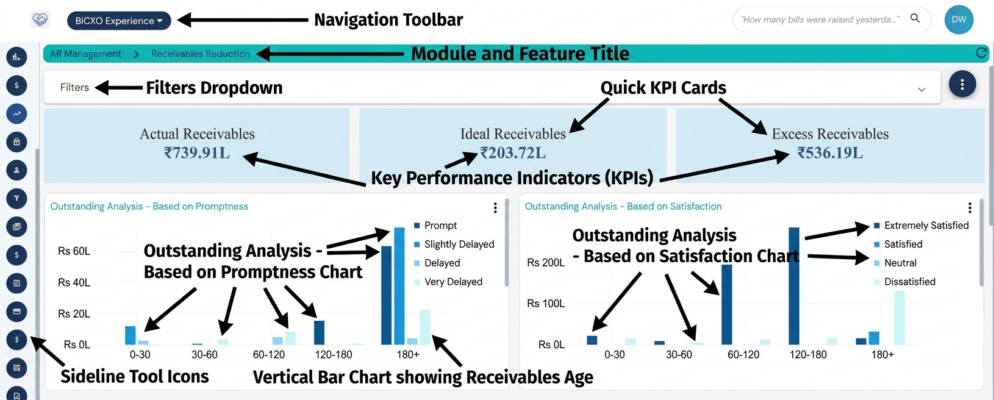
Accounts receivable automation would have dashboards that would provide real-time insights into receivables, aging and collection performance and this would enable better decision-making and financial planning.
6. Dispute Management
For faster resolution, disputes would be tracked and managed within the system. This would improve efficiency and strengthen customer relationships.
Benefits of Accounts Receivable Automation
1. Improved Cash Flow
Payment cycles would be accelerated with faster invoicing and proactive collections which would lead to better cash flow management.
2. Increased Efficiency
Automation would reduce manual tasks and streamline workflows due to which finance teams would be able to focus more on strategic activities.
3. Reduced Errors
The chances of errors would be reduced by minimizing manual data entry. This would improve accuracy in invoicing and reconciliation.
4. Better Customer Experience
Customer satisfaction would be enhanced with timely communication and flexible payment options. This would help build stronger relationships.
5. Enhanced Visibility
A better control over receivables would be available with real time data and insights with such insight’s businesses would be able to make informed financial decisions quickly.
Steps to Implement Accounts Receivable Automation
Only with a proper plan and execution, accounts receivable automation would be possible. Here’s a step-by-step guide.
Evaluate Existing Processes
An evaluation of the company’s existing accounts receivable workflow which would identify inefficiencies, bottlenecks and manual dependencies.
Defining objectives.
The organization should set clear objectives for reducing days sales outstanding, thus improving collections or enhancing reporting accuracy.
Choose the right solution.
The company should choose an automation tool that would integrate with the existing ERP or accounting software.
Set Up the Workflows.
The finance team would be able to modify their workflows as per your business requirements for invoicing, reminders, approvals and dispute management.
Prepare your staff by training.
The organization should train the finance teams for seamless integration of the system.
Monitor and Optimize
The company should track performance metrics and optimize processes for better results.
Best Practices for Accounts Receivable Automation
To gain maximum benefit of Accounts receivable automation, organizations should follow best practices.
- Classify customers according to payment patterns for appropriate follow-ups.
- Use analytics to identify trends and enhance collections.
- Plan your reminders carefully, to avoid over-communication.
- Continuously review KPIs such as DSO, aging and collection efficiency
The Future of Accounts Receivable Automation
The future of accounts receivable automation will lie in advanced technologies such as artificial intelligence (AI). These technologies would enable:
- Predictive analytics for payment behaviour
- Intelligent cash application
- Automated dispute resolution
- Personalized customer communication
As businesses would continue to embrace digital transformation, accounts receivable automation would become a standard rather than a luxury.
Conclusion
If a business is looking to stay competitive, then accounts receivable automation would be an essential business functionality to have. Through process optimization, simplification to reduce errors and improved cash flow, it would help finance teams operate efficiently. Companies which would invest in accounts receivable automation would not only improve operational efficiency but they would also create better customer relationships and boost financial performance. It is possible for the businesses to be able to transform their AR function into a strong growth driver with the right tools and approach.
FAQs
1. What is Accounts Receivable Automation and how does it work?
The automation of accounts receivable will use technology to improve invoicing, payment tracking and collection. Repetitive tasks would be automated thus making it possible such as sending invoices, matching payments and generating reports thereby reducing manual effort and increasing accuracy.
2. How does Accounts Receivable Automation improve cash flow?
By automated payment reminders, the automation would speed up the invoicing and collection process. As a result, this would ensure that payments are received faster thus ensuring no delay.
3. Is Accounts Receivable Automation suitable for small and mid-sized businesses?
Certainly, every business irrespective of its size can hugely benefit from accounts receivable automation. By using the software, small and mid-sized businesses can reduce the manual workload, lower errors and achieve better visibility into their receivables without having a larger finance team.
