
What is a Treasury Management System?
Businesses use Treasury Management Solutions (TMS) which is a financial software solution to manage their financial operations. This system would serve as a centralized platform that will allow companies to monitor cash positions, oversee bank accounts, manage liquidity and forecast future cash flows. It would also help businesses to track investments, reconcile payments and ensure compliance with internal financial policies.
TMS platforms are mostly used by finance teams, corporate treasurers, controllers, auditors and other financial professionals. These systems would often integrate with enterprise resource planning (ERP) software and banking systems while providing a comprehensive view of a company’s financial health. With real-time visibility and data consolidation, TMS would become an essential part of daily treasury operations of businesses.
The Need for Optimizing Cash Flow for Businesses
Every business would consider cash flows as their lifeline as it would reflect the inflow and outflow of money through daily operations, investments and financing activities. Inflows come from the sales, services fees, dividends, interest and other sources while outflows would include payments to suppliers, salaries, taxes, loan repayments and other expenses.
Maintaining a positive cash flow is essential as it would enable businesses to operate smoothly, meet obligations on time and invest in their growth. Companies would have to face liquidity shortfalls, delayed payments and financial instability without a proper cash flow management.
Optimizing cash flow would involve forecasting, planning and controlling cash movements. Businesses would need to align their cash inflows with outflows which can be done by reducing idle cash and ensuring funds which are available when needed. Effective cash flow optimization may also reduce the need for short-term borrowing and increase returns on surplus cash.
Avenues of Revenue for Companies
Companies often generate revenue through various channels which would include selling products, providing services, licensing intellectual property, earning royalties and offering subscriptions. Their additional income may come from consulting fees, commissions, rent from properties, interest from bank deposits and dividends from investments.
Revenue may be collected through direct sales, contracts, online platforms or wholesale distribution. It could be recurring, seasonal or one-time. Understanding these patterns is essential for forecasting and managing cash effectively.
Each source of income has its own timing and structure. Some payments may be received upfront, while others are delayed. In some industries, clients pay in instalments or after project completion. These variations in revenue timing may directly affect cash availability and must be managed carefully by businesses.
Improving Financial Health with Treasury Management Solutions
A Treasury Management System would help improve the overall financial health of a company. It may increase the operational efficiency by reducing manual work, minimizing delays and aligning finance activities of businesses. With better control over cash movements and greater visibility into transactions, companies can manage risks more effectively.
TMS would improve capital usage by minimizing idle funds and reducing borrowing needs. It would support strategic decision-making through accurate forecasts and real-time data. With reliable information in hand, finance leaders can now plan investments, manage expenses and allocate resources with confidence.
The system would also strengthen internal communication. Finance teams would be able to provide timely updates to executives, share insights with other departments and align actions with corporate goals. As the business grows, TMS may scale to support new markets, currencies and operations.
Cost reduction would be another key benefit where by identifying inefficiencies, eliminating redundant processes and optimizing bank fees, companies can lower their overall financial expenses. Transparent records and consistent processes would also improve governance and build trust with stakeholders.
The Role of Treasury Management Solutions in Corporate Cash Flow Optimization
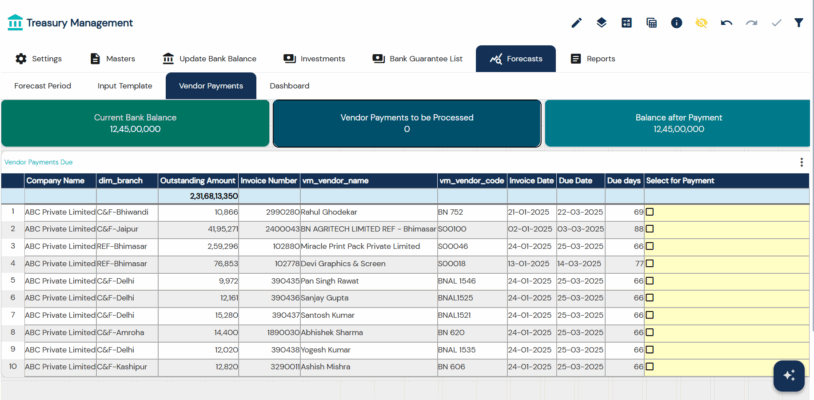
A Treasury Management System will play a vital role in optimizing corporate cash flow. First, it would provide real-time visibility into the company’s cash position across multiple accounts and geographies. With consolidated views of balances and transactions, finance teams would be able to make informed decisions about fund movements and liquidity needs.
TMS solutions may enable businesses to forecast cash flows by analysing historical data, upcoming payments and expected receivables. This would help in identifying future surpluses or shortages and would support better financial planning. Scenario modelling tools within the treasury management system would allow users to simulate different conditions and prepare accordingly.
Liquidity management features in TMS would include pooling of funds from different accounts, automatic sweeping to central accounts and intercompany netting. These tools will help in reducing idle cash and improving interest earnings. With a clearer understanding of liquidity, businesses would avoid unnecessary borrowing and better utilize internal resources.
The treasury management system would also be able to track working capital metrics like days sales outstanding (DSO), days payable outstanding (DPO) and inventory turnover. These indicators would help companies measure the efficiency of their cash cycles and identify areas for improvement.
Debt and investment management are other key functions. TMS would help in scheduling loan repayments, monitoring interest obligations and tracking compliance with debt covenants. For surplus funds, the system would support investment tracking, ensuring proper allocation, maturity management and return analysis.
By integrating with banks, a treasury management system would provide a detailed views of bank charges, credit lines and guarantees. This would improve bank relationship management and would help businesses negotiate better terms. The system would also enhance internal controls by enforcing financial policies, validating transactions and automating reconciliations.
Risk management is another important benefit of TMS as it would help businesses identify exposure to currency, interest rate, and counterparty risks. Alerts and reports will notify users of unusual transactions or potential breaches thus reducing the chance of fraud or financial loss.
Automation features will streamline repetitive tasks, reduce errors and improve reporting accuracy. Standardized workflows and centralized documentation would support audit readiness and regulatory compliance. These improvements contribute to the overall efficiency and reliability of treasury operations of the company.
Conclusion
A Treasury Management Solutions is a vital tool for corporate cash flow optimization. It would support visibility, planning, control and risk management across all financial operations. By helping companies manage liquidity, automate processes and make data-driven decisions, TMS would contribute directly to financial stability and business growth.
In today’s fast-paced business environment, the ability to track and optimize cash flow is essential. With a TMS in place, companies would be able to improve their financial performance thus reducing risk and building a strong foundation for future success.
