
Understanding Treasury Management Systems
A treasury management system (TMS) is a software application that is used to automate and streamline financial processes.It will assist companies in managing their cash flows, investments, financial risks and regulatory compliance. Selecting the correct TMS is crucial for companies to facilitate effective financial management.
Assessing Business Needs
Prior choosing a treasury management solutions (TMS), businesses should assess their financial operations. Managing cash flow, needing money to invest, keeping an eye on investments and rules are the main things to think about when choosing the right TMS. Knowing current problems and future hopes will guide businesses in the choice
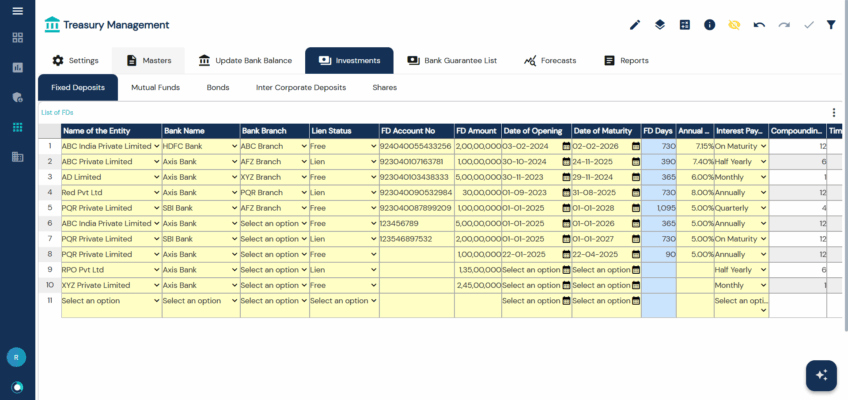
Key Features to consider while selecting a treasury management solutions
- Cash and Liquidity Management: A good treasury management system would let you see your cash positions right away and help with accurate forecasting
- Risk Management: The system should include tools which would help in monitoring and mitigating financial risks such as currency fluctuations and market volatility.
- Payment Processing: An efficient system would provide secure and efficient payment processing capabilities thus ensuring seamless financial transactions.
- Integration Capabilities: The treasury management system would integrate with existing enterprise resource planning (ERP) and banking systems for a smooth flow of work.
- Automation and AI: The enhanced automation features would minimize manual intervention and enhance efficiency of operations.
- Data Security: Businesses should ensure that the system follows robust cybersecurity protocols which is essential for protecting financial data.
- User Experience: The interface of treasury management system should be intuitive and user-friendly so that it can be used easily.
Deployment Options
- Cloud-Based Solutions: Cloud-based TMS options will provide flexibility, scalability and lower upfront costs.
- On-Premise Solutions: On-Premise systems will provide better data control but will consume higher initial outlays
- Hybrid Solutions: Some businesses may opt for a combination of both thus balancing flexibility and control.
Cost Considerations
The cost of a TMS would differ based on features, deployment model and vendor pricing structure. Businesses should evaluate initial setup costs, subscription fees, maintenance expenses and potential return on investment (ROI).
Implementation Strategy
A structured implementation approach would ensure a smooth transition to a new TMS. Steps include:
- Defining business requirements
- Engaging stakeholders from finance, IT, and operations
- Conducting system testing and user training
- Gradual rollout to minimize operational disruptions
Evaluating System Performance
After implementation, businesses will have to regularly assess the system’s performance. Transaction processing efficiency, compliance accuracy and cost savings achieved are the key performance indicators to evaluate performance of treasury management solutions.
Conclusion
Selecting the appropriate treasury management solutions for businesses would be a strategic decision that influences financial efficiency and the management of risks. It will take an evaluation of needs; systems features and solutions alignment with long-term financial goals for businesses to make the right choice.
