
As enterprises grow, complexities grow. The enterprises would encounter difficulties in areas like expansion of network of suppliers, employees, customers and banks. Enterprises would manage cash across regions, currencies and subsidiaries. There would be delays in data consolidation, fragmented banking relationships and manual payment approvals would slow down operations. Traditional banking platforms will provide transaction – level functions but lack holistic oversight while on the other hand treasury management system (TMS) would bring integrated solutions. They would centralize visibility, improve liquidity planning and introduce structured governance. In this blog, we would look into & benefits of implementing a treasury management system in a growing enterprise.
What is a Treasury Management System?
A Treasury Management System is a digital platform designed to manage an enterprise’s financial activities. It would centralize cash, liquidity, payments and risk-related data into one system unlike traditional banking portals that would only display balances or enable transfers, a TMS will integrate with enterprise systems, banks and regulatory platforms. The system would provide dashboards for real-time cash positions, automate payment approvals, reconcile accounts, manage hedging instruments and enforces compliance. For a growing enterprise, a treasury management system would become the control centre for all treasury functions thus reducing manual effort while improving accuracy and decision support.
7 Benefits of implementing Treasury Management System
Centralized Cash Visibility
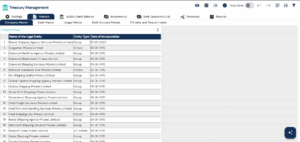
Multiple accounts across banks would have obscure yet accurate cash positions. Without a consolidated platform, treasury teams would rely on manual downloads and reconciliations. A treasury management system would provide dashboards that would pool balances from every account. The enterprises then would categorize cash by currency, entity or region. Centralized visibility would support better allocation of funds thus minimizing idle balances and strengthen liquidity decisions.
Structured Liquidity Forecasting
Forecasting would ensure enterprises anticipate obligations and plan for investments. The spreadsheet-based models would often lack accuracy due to fragmented inputs. A treasury management system would use transaction history, receivable schedules and payables data to generate future cash positions. Forecasting such outputs will be standardized which would reduce human error. Enterprises would align operations with strategic planning by preparing ahead for cash surpluses or deficits.
Streamlined Payments and Approvals
The payment processes in growing enterprises will expand with vendor networks and employee costs. The risks of duplication or delays would increase with manual uploads and single level approvals. A treasury management system would automate payment workflows, this would help bulk payments move through structured approval chains, with audit trails capturing actions. Multi-tier controls will ensure segregation of duties thus reducing operational risks. Treasury teams will gain oversight without manual intervention.
Automated Reconciliation
In traditional settings, reconciling bank statements against ERP records would remain resource- intensive. Manual checks will often overlook mismatches or duplicate entries. A treasury management system would include automated reconciliation modules. Predefined rules would match transactions quickly. Exceptions found would be flagged instantly for review. Automation would accelerate closing cycles and strengthen confidence in reported balances.
Risk Management and Hedging
The currency fluctuations and interest rate changes will impact financial outcomes. Traditional tools would lack the capacity for measuring exposures across entities. A treasury management system would track positions across currencies, counterparties and instruments. The dashboards will quantify exposures and simulate outcomes which would help enterprises use hedging tools within the system to mitigate risks. A structured framework for monitoring and action will minimize financial volatility.
Compliance and Control
The enterprises which would expand will face diverse regulatory environments. The traditional banking tools would require parallel record-keeping for compliance checks whereas a treasury management system would include built-in controls such as approval hierarchies, user access rights and activity logs. The reports would be generated directly for audits or filings with the help of the system. Enterprises would be able to reduce risks of breaches while maintaining transparency for stakeholders by embedding compliance structures.
Scalability for Growth
Business expansion would introduce new accounts, currencies and subsidiaries. Manual processes will often collapse under scale on the other hand the treasury management system would support additional geographies, users and instruments without disruption. The enterprises would grow without replacing systems or redesigning workflows while scalability will ensure long-term operational stability as enterprises move from regional to global markets.
Industry Use Cases
Treasury Management system is used across industries like-
Manufacturing Industry
The system is used to –
- Automatically monitor raw material imports, vendor receipts, and multi-currency flows.
- Exchanging fragmented bank logins with consolidated dashboards for real-time visibility.
- Make foreign exchange exposure management automated to minimize volatility risk in currencies.
- Project liquidity on production schedules to prevent raw material shortages.
- Control capital expenditure budgeting and finance for the expansion of plants.
- Enrich supplier relationships by paying on time with automated workflows.
Retail Sector
The system is used to-
- Consolidate physical store inflows, distributors, and online channels.
- Automate payment for landlords, suppliers, and logistics partners with accuracy.
- Forecast liquidity based on peak seasons for demand like sale seasons during holidays.
- Automating processing large numbers of refunds, returns, and customer payouts.
- Merge treasury information with POS and ERPs for improved working capital visibility.
- Track individual store-level daily cash positions to prevent balances lying idle.
- See growth into new markets with real-time treasury visibility.
Service Sector
The system is used to-
- Match receivables with project milestones to finance payrolls and operating costs.
- Regularly automate client invoicing and collections tracking to eliminate receivable holdups.
- Make timely decisions with aggregated multi-entity cash reports.
- Improve liquidity by paying vendor and contractor invoices on due date.
- Reduce Financing Costs by Optimizing Work Capital Requirements.
- Internationally, standardise treasury activities in order to accommodate scalability.
Conclusion
Enterprises in their growth phases will require systems that handle increasing complexity. A treasury management system will consolidate data, structure liquidity planning, streamline payments, automate reconciliation, manage risks, enforce compliance and scale with business expansion. Beyond financial efficiency, a treasury management system would build resilience, support strategic planning and enable enterprises to pursue opportunities with confidence. For any enterprise shifting from fragmented banking tools to structured treasury platforms, these seven benefits would demonstrate the value of transformation.
