
Introduction
Every founder has sat across from an investor who’s seen a hundred pitch decks with the same J curve revenue chart and no explanation behind it. Investors don’t doubt ambition but they do doubt forecasts that can’t hold up when questioned. A number pulled from a spreadsheet with no visible logic behind it rarely survives a single follow-up question. This is the gap AI in finance forecasting is built to close. Instead of a forecast built on assumptions that no one can trace, AI in finance forecasting ties every projection to real business drivers by giving founders a forecast they can actually defend in the room.
Problem
Start-up forecasts tend to lose investor confidence for a few consistent reasons:
- Assumptions that don’t hold up to scrutiny. A revenue line that simply grows 20% month over month, with no link to pipeline, pricing or customer acquisition, invites the obvious question: based on what?
- Forecasts built once and rarely updated. Many start-up forecasts are built for a fundraise and then left untouched, so by the time diligence starts, the numbers are already stale.
- No visible connection between revenue and cost. Investors want to see how hiring, spend and revenue move together, not two separate spreadsheets that happen to sit in the same deck.
- Inability to answer “what if” in real time. When an investor asks how the model changes under slower growth or delayed sales, founders without a dynamic model are left estimating on the spot.
These gaps don’t necessarily mean the business is weak but they make the forecast look unreliable and that’s often enough to stall a conversation.
Solution
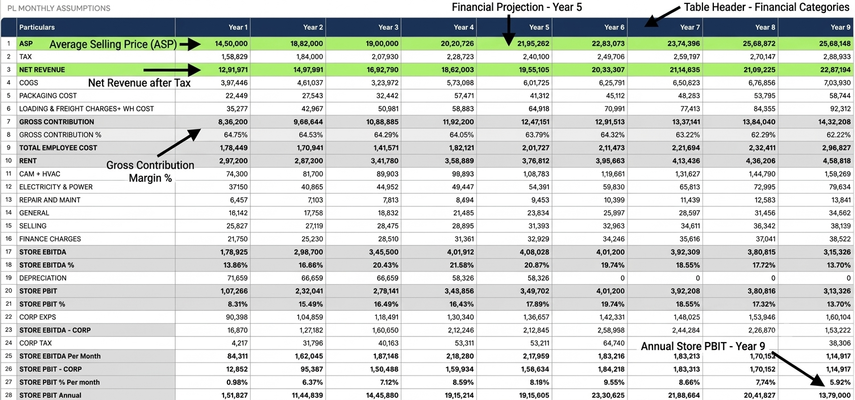
AI in finance forecasting will directly address what investors are actually testing for:
- Driver-based forecasts, not top-down guesses. AI in finance forecasting builds projections from real inputs with the help of pipeline conversion rates, pricing, hiring plans, vendor costs so every number has a traceable basis instead of an assumed growth curve.
- Forecasts that stay current. Because AI in finance forecasting updates continuously as actuals come in, founders walk into investor conversations with a forecast that reflects the business today, not the one built three months ago.
- Revenue and cost modelled together. AI in finance forecasting would connect revenue drivers and cost drivers in one model, so investors see a coherent picture of margin and cash and not two disconnected stories.
- Live scenario answers. When an investor asks how the forecast shifts if sales slow or a hire is delayed, AI in finance forecasting can produce that scenario instantly, turning a difficult question into a moment of credibility rather than hesitation.
For founders, the real value of AI in finance forecasting isn’t a better-looking chart, it’s a forecast that survives the questions that follow it.
Conclusion
Investors aren’t looking for certainty, they’re looking for a forecast that shows the founder understands their own business. AI in finance forecasting gives start-ups exactly that: a model built on real drivers, updated continuously and capable of answering hard questions on the spot instead of after the meeting. In a fundraising environment where trust is often won or lost in the follow-up questions, that difference matters more than the growth rate on the first slide.
FAQs
Q1: How does AI in finance forecasting make a start-up’s numbers more credible to investors? AI in finance forecasting would ties every projection to real business drivers like pipeline conversion, pricing and hiring plans, so investors can see the logic behind the numbers instead of an unexplained growth assumption.
Q2: Can AI in finance forecasting help founders respond to investor questions during due diligence? Yes. Because AI in finance forecasting supports instant scenario simulation, founders can answer questions about slower growth, delayed deals or hiring changes in real time rather than needing to rebuild a model afterward.
Q3: Does AI in finance forecasting replace the need for a founder to understand their own numbers? No. AI in finance forecasting handles the modelling and updates, but founders still need to understand the drivers behind their business, the tool makes that understanding easier to demonstrate, not unnecessary.
