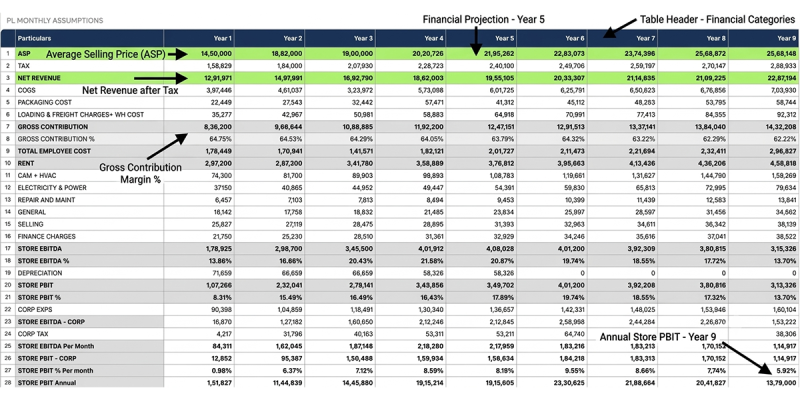
Introduction: Why Automated Financial Reporting Software Matters for Store KPIs
A rising sales graph is loved by every retail owner. The footfall is up, billing counters become busy and monthly turnover will look healthier than last year. A higher sale does not necessarily mean healthier business. A store would sell more and still earn less, because discounts, returns, rent staff costs and dead stock would quietly eat the margin.
This is why business leaders in retail would shift from sales only dashboards to automated financial reporting software that would connect sales with cost, cash and profitability. The forecasting would help separate real growth from simple volumes.

The Problem: Sales Growth Can Hide Weak Store KPIs
Since the reports are compiled manually from billing systems, purchase records and bank statements, the numbers would often arrive weeks after the month would close but by then, the decisions would have been already made.
Common warning signs would include:
- Growing revenue, shrinking margin: The gross margin per item would reduce even though the sales would be high due to heavy promotions.
- Inflated store performance: Store performance may appear inflated when they have busy and low shrinkage stores. This may mean that they have long supplier credit cycles or rising shrinkage despite being low on the frontline
- Inconsistent KPIs: There is likely to be different calculations for sales per square foot, average basket value or inventory turnover across stores.
- No forward view: Business teams would not be able to review the past without automation tool for reporting finances.
The result would be a false sense of growth where the business leaders would celebrate turnover while cash tightens and working capital stretches. An AI in financial forecasting would help the companies play scenarios.
The Solution: Automated Financial Reporting Software and AI in Financial Forecasting
The fix would be not more reports but better faster and more connected reporting.
- Automate the reporting cycle
The data from point of sale, inventory, accounting and bank systems would be pulled into one consistent view with the help of automated financial reporting software. The store-wise profit and loss, margin and cash position would update continuously instead of at month-end.
- Standardise the KPIs that matter
Alongside revenue, track gross margin return on inventory, contribution margin per store, sales per square foot, inventory turnover and cash conversion cycle. The automated financial software would apply the same definitions to every store, so that the comparisons would be fair.
- Add a forward-looking layer
Historical sales, seasonality, promotions and cost patterns to project demand, margins and cash needs would be studied by AI in financial forecasting. With the forecasting, it would be able to flag stores which might likely miss targets before the quarter would end so the corrective action would be possible.
- Run scenarios
What happens to margin if discounts deepen by two percentage points? What if rent rises at a high-street location? AI in financial forecasting lets the finance teams test these questions in minutes rather than rebuilding spreadsheets.
- Act on exceptions
Business leaders can review alerts: a store whose margin fell, a category with slow turnover, a region where receivables would be stretching instead of reading every report.
These steps would turn KPIs from a rear-view mirror into a decision tool when taken together. The growth is judged by profit, cash and return on capital not just by turnover alone.
Conclusion: Measure Growth, Not Just Sales
A company’s growing sales is a good sign only when margin, cash flow and inventory health rise with them. Retail companies that depend on manual reporting often identify problems too late. But automated financial reporting software will give them timely, consistent visibility across stores. Plus, AI in financial forecasting will show the trajectory of the numbers. When used together, it will help finance leaders distinguish genuine growth from busy-looking revenue and enable confident decisions about pricing, inventory and expansion.
FAQs
1. What is automated financial reporting software in retail?
It is a technology that would collect data from billing, inventory and accounting systems and would produce store -wise financial reports automatically, thus reducing manual efforts and delays.
2. How does AI in financial forecasting improve store KPI tracking?
KPI shortfalls can be spotted early as AI in financial forecasting would analyse past sales, seasonality and costs to predict future revenue and cash needs.
3. Which KPIs show real growth beyond sales?
A more accurate picture can be given by gross margin, contribution margin per store, inventory turnover, sales per square foot and cash conversion cycle.
