
Businesses would have to ensure a healthy cash flow, reduce manual errors and achieve operational efficiency in a fast-paced financial environment. Accounts receivable automation will replace manual invoicing, tracking and collection processes with intelligent systems
Automation is one of the effective ways to achieve this but just not implementing it will be sufficient to enjoy its advantages. The business should adopt the right strategies and implementation practices. This blog would explore accounts receivable automation best practices to help finance teams optimize processes and enhance financial outcomes.
Understanding Accounts Receivable Automation
Accounts receivable automation is the implementation of software that would manage the entire receivables process. This would include generating and sending invoices, collecting and reconciling payments. With automation, repetitive manual tasks would be eliminated and human error would be reduced with insights into cash flow in real-time.
When done right, the automation will increase efficiency while enhancing customer relationships by billing them in a faster and more transparent manner.
Why Best Practices Matter?
When implementing automation, businesses should adhere to best practices to ensure their automation efforts are aligned with business goals, improve accuracy and deliver measurable results.
1. Standardize Your Invoicing Process
It’s essential to standardize invoicing formats and procedures before implementing accounts receivable automation as inconsistent invoices would confuse customers and delay payments.
The organization should ensure that every invoice includes:
- Their payment teams are cleared.
- Their billing details are accurate.
- The organization follows the due date of payment to avoid penalties.
- The line items are easy to understand.
Standardization would allow automation tools to process invoices seamlessly and reduces disputes.
2. Integrate with Existing Financial Systems
Integrating accounts receivable automation with the organization’s existing accounting, ERP and CRM systems would be one of the key best practices as a disconnected system would create data silos and would require manual intervention.
The integration would ensure:
- There is real-time data synchronization
- The financial reporting is accurate.
- Reconciliation is faster.
- There is better visibility across departments.
This would create a unified ecosystem where all financial data flows smoothly.
3. Automate Invoice Delivery
Delays in sending invoices would often lead to delayed payments. Automating invoice delivery will ensure that invoices will be sent immediately after goods or services are delivered.
The best practices would include:
- Sending invoices via email.
- Setting up automatic triggers for invoice generation
- Enabling digital invoice tracking
This would reduce turnaround time and improves the chances of early payment.
4. Implement Smart Payment Reminders
Chasing overdue payments manually will be time-consuming and inefficient. Businesses would be able to set up automated payment reminders with accounts receivable automation.
The effective reminder strategies would include:
- Sending reminders before the due date
- Scheduling follow-ups for overdue invoices
- Personalizing messages based on customer behaviour
Such automated reminders would help maintain consistent communication without straining customer relationships.
5. Offer Multiple Payment Options
Customers would likely pay more on time when the payment process is convenient thus providing multiple payment options will be an essential best practice.
The business can consider offering:
- Credit and debit card payments
- Bank transfers
- Digital wallets
- Online payment portals
Accounts receivable automation platforms would often support integrated payment gateways thus making it easier for customers to settle invoices quickly.
6. Enable Real-Time Tracking and Reporting
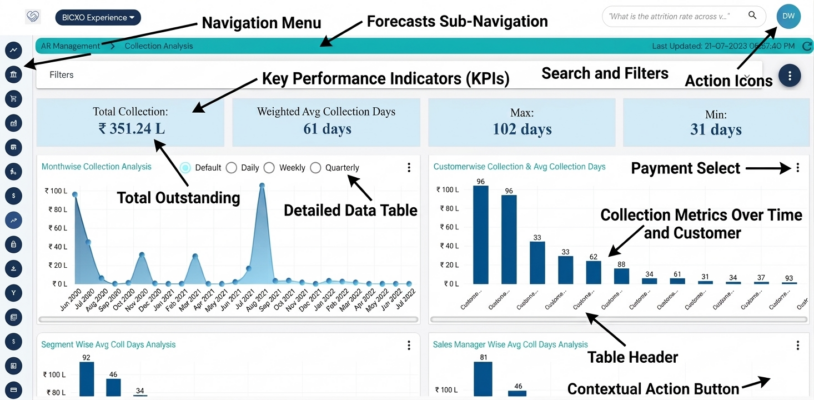
One of the biggest advantages of accounts receivable automation would be visibility and this where the finance teams should leverage their dashboards and reporting tools to monitor receivables in real time.
The key metrics to track include:
- Days Sales Outstanding (DSO)
- Aging reports
- Collection efficiency
- Payment trends
The real-time insights would help business identify potential risks and take proactive action.
7. Automated Cash Application
Payments can be reconciled quickly and accurately by automated cash application which would use rules and AI to do so.
The benefits would include:
- Manual efforts will be reduced
- Reconciliation cycles would be faster
- Accuracy will be improved.
- Audit trails would be better.
This would ensure that financial records will be always up to date.
8. Establish Clear Credit Policies
Automation would work best when supported by well-defined credit policies. Businesses will have to establish clear guidelines for extending credit before implementing accounts receivable automation
The key elements would include:
- Credit limits
- Payment terms
- Risk assessment criteria
- Escalation procedures
To ensure consistent decision-making, these policies would be embedded into automation system.
9. Focus on Customer Experience
Even as efficiency is automated, the organizations should never let the customer relationship be at loss thus it’s essential to put the customer at the core.
The smart approaches would include:
- Offering self-service access to invoices.
- Ensuring transparent communication.
- Having flexible payment options.
- Addressing conflicts promptly.
A pleasant customer experience would result in speedier payments and stronger business relationships.
10. Ensure Data Security and Compliance
Financial data will be highly sensitive thus making security a top priority. Businesses will have to ensure that their accounts receivable automation systems would comply with relevant regulations and standards.
Important considerations for organizations would be:
- Data encryption
- Secured access controls
- Compliance with financial regulations
- Regular system audits
This would protect both the organization and its customers from potential risks.
11. Continuously Monitor and Optimize
Automation will not be a one-time implementation. In order to achieve long-term success, continuous monitoring and optimizing will be necessary.
The procedure to be followed will be:
- Routine assessment of system performance.
- Get feedback from users and customers.
- Adjust workflows according to evolving demands.
- Use analytics to enhance processes.
Constant enhancements in accounts receivable automation will make it efficient and useful.
12. Train Your Team Effectively
Even the most advanced accounts receivable automation system will fail without proper user adoption thus, training your finance team is essential.
Focus on:
- System functionality and features
- Best practices for usage
- Troubleshooting common issues
- Encouraging a digital-first mindset
A well-trained team will maximize the benefits of automation and drive better results.
Conclusion
Accounts receivable management is a powerful tool that would improve efficiency, accuracy and cash flow management. The successful implementation and management of such automation will determine its effectiveness. If businesses want to realize the full potential of automating services or processes, they would need to invest time in standardizing processes and integration systems.
In a competitive landscape, adopting an optimizing accounts receivable automation will no longer be an option but a strategic necessity. The organizations that would embrace these best practices would be better positioned and will be able to enhance financial performance, reduce operational costs and build stronger customer relationships.
