
Introduction: AI in Accounts Receivable and the New Start-up Finance Stack
Finance teams in start-ups are small but their work rarely is. Founders and finance lead of start-ups are expected to close books, track runway and manage investor reporting with a fraction of the headcount the larger companies have. A function that quietly drains this bandwidth his accounts receivables. AI in accounts receivable would emerge as a core level of the modern start-up financial operating system by replacing manual tracking with intelligence that would predict, prioritize and flag risk before it would become a cash problem.
The Problem: Why Start-ups Struggle Without AI in Accounts Receivable
Many early- stage finance stacks treat receivables as a spreadsheet exercise where someone would check which invoices are overdue, send reminders and update a tracker manually. This would work until the customer base would grow past a handful of accounts. Without AI in accounts receivable, start-ups would face a few recurring issues:
- No early warning system. Late payments are noticed only after they happen, not predicted based on customer behaviour patterns.
- Manual prioritization. Finance teams would chase every overdue invoice with equal urgency instead of focusing on high-risk or high-value accounts first.
- Disconnected from forecasting. Receivable’s data will sit separately from cash flow models, so runway projections are built on assumptions rather than real collection trends.
- Founder time lost to follow-ups. In lean teams, founders themselves end up drafting payment reminder emails instead of focusing on growth.
These gaps compound as a start-up would scale. A financial operating system that cannot anticipate collection risk is reactive by nature, and reactive finance is expensive finance.
The Solution: How AI in Accounts Receivable Fixes the Gaps
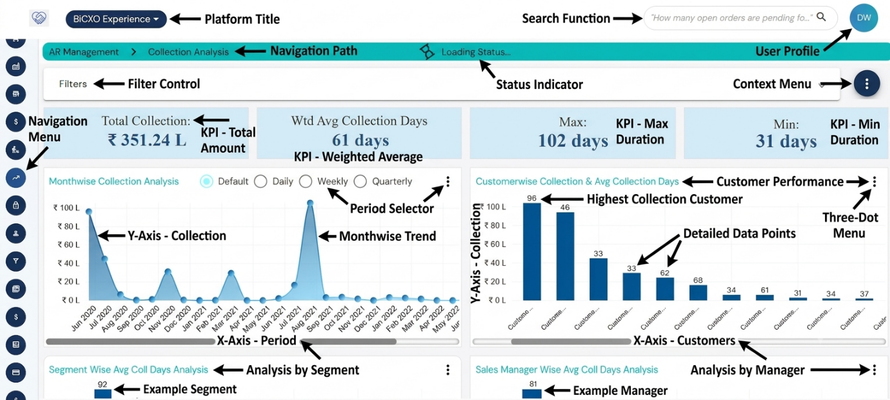
AI in Accounts Receivable would shift the function from record-keeping to prediction. Instead of waiting for an invoice to age past due, models would be trained on historical payment behaviour that can flag which customers are likely to pay late, weeks in advance. This would change how start-up finance teams operate:
- Predictive risk scoring would rank customers by likelihood of delayed payment, so collection effort is directed where it matters most.
- Pattern recognition would surface recurring reasons for delays, such as specific invoice terms or customer segments, so root causes can be addressed rather than symptoms.
- Integration with cash flow forecasting would mean receivables data feeds directly into runway and scenario models, giving founders a more accurate picture of available cash.
- Reduced manual follow-up would free finance teams to focus on judgment calls rather than routine chasing.
For a start-up’s financial operating system, this is a meaningful shift. Accounts receivable would stop being an isolated back-office task and become a live input into strategic decisions, from hiring plans to fundraising timelines.
Conclusion: AI in Accounts Receivable as the New Operating Layer
The financial operating system for start-ups is being rebuilt around intelligence rather than manual process and AI in Accounts Receivable is one of the clearest examples of that shift. It turns a historically reactive function into a predictive one, giving lean finance teams the ability to act before cash flow risk materializes rather than after. As start-ups mature, this kind of intelligence layer would become less of a convenience and more of a foundation for sound financial decision-making.
FAQs
What does AI in Accounts Receivable actually predict?
AI in Accounts Receivable will predict the likelihood of late or delayed payments by analysing historical customer payment behaviour, invoice terms and patterns across similar accounts by allowing finance teams to act before an invoice becomes overdue.
How does AI in Accounts Receivable help with start-up cash flow forecasting?
By feeding real collection trends into forecasting models, AI in Accounts Receivable would replace assumption-based runway projections with data grounded in actual customer payment patterns thus improving forecast accuracy.
Is AI in Accounts Receivable only useful for start-ups with large customer bases?
No. AI in Accounts Receivable is valuable even for start-ups with a small number of accounts, since early visibility into payment risk matters most when cash reserves are limited and every collection delay has an outsized impact on runway.
