The Expense Management Problem Every Start-up Knows
Most early-stage start-ups don’t have a CFO as they have a founder with a spreadsheet, a part-time accountant and the constant anxiety of not knowing in real time whether the business would be healthy or quietly bleeding cash.
For years, poor expense management was quite evident in start-ups as they either hired expensive finance talent too early or flew blind for too long. That trade-off is now disappearing with AI-powered finance tools that are giving start-ups access to expense management capabilities that would once require a full team at a fraction of the cost.
The Real Cost of Manual Expense Management
The problem isn’t that founders don’t care about numbers. It’s that traditional expense management processes were built for large organisations with dedicated teams.
A typical start-up with 50 employees would process 200 bills a month thus spending 15-20 hours a week on data entry, receipt chasing and reconciliation. The manual expense management would carry a 1-4% error rate which would be enough to trigger incorrect GST filings, duplicate payments and delayed cash flow visibility. During fundraising, expense management which is weak would routinely delay funding rounds by 2-4 months, as investors would demand clean, well categorised financial records for due diligence.
The gap is not ambition. It’s the right expense management infrastructure.
Where AI Makes Start-up Expense Management Smarter
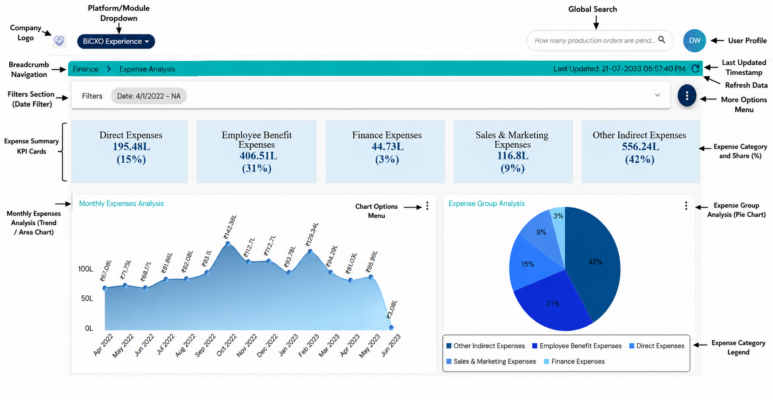
Burn rate and runway — always visible. An AI- based expense management tool would auto categorise transactions, reconcile bank feeds and surface real-time burn rate and cash runway daily. What used to take finance controller days to compile would be available on a live dashboard which would mean founders walk into investor conversations with current numbers not last month’s estimates.
Automated reconciliation at scale. Modern AI tools would process up to 98% of expense transactions automatically where finance teams would reclaim up to 40% of their time from routine expense reconciliation thus redirecting it to decisions that would actually move the business forward.
GST compliance built into expense management. GST is a serious operational burden for Indian start-ups as multiple tax slabs, ITC reconciliations, GSTIN verification a single filing error would trigger penalties of Rs 10,000 or more. An AI powered expense management would handle this automatically by removing a major compliance risk from a function most start-ups would be under-resourced to manage carefully.Investor-ready reporting on demand. Board-ready MIS reports, budget-vs-actuals comparisons, and cash flow statements generated automatically from your expense data — not assembled manually before every meeting. In 2025, burn multiple became a top investor metric. Start-ups with tight expense management present this in real time and raise faster.
Conclusion
AI has democratised expense management where capabilities that once required a VP of Finance spend time for analytics, real-time dashboards, predictive forecasting, automated compliance would be now accessible to lean founding team.
For Indian start-ups navigating a funding environment that would reward financial discipline, a strong expense management would not just be convenient but strategic. The start-ups would build clean expense management infrastructure arrive early at every fundraiser with tighter books, better metrics and stronger credibility. The tools are available for start-up, the question is whether they are using it.
Frequently Asked Questions
Q1. At what stage should a start-up invest in expense management tools?
Ideally start-ups should build clean expense management infrastructure early right from day one to avoid the pricey, time-consuming process of reconciling messy records before fundraising. Even pre-revenue companies would benefit from real-time expense tracking, burn visibility and GST compliance automation.
Q2. Can AI expense management tools replace a CFO for an early-stage start-up?
They would be able to replace much of the operational workload like book-keeping, reconciliation, reporting and spend monitoring. However, strategic decisions around fundraising, financial modelling and investor relations would still benefit from human expertise. Many start-ups combine AI-powered expense management tools for day-to-day operations with a fractional CFO for strategic oversight.
Q3. How does expense management software help during fundraising? The investors would require clean, well-categorised financial records for due diligence. The start-ups with strong expense management system would be able to generate this documentation on demand rather than spending week reconstructing records manually by removing one of the common reasons funding rounds stall.
